

1. Introduction: Why Forklift Noise Is No Longer Just About “Loud or Quiet”
Forklift noise used to be evaluated in a very simple way—just check the decibel level and assume lower is better. However, in modern warehouse operations where Toyota forklift fleets are widely used, noise has become a multi-dimensional performance factor rather than a single number.
Two forklifts with similar dB ratings can create completely different working environments. One may produce a smooth, consistent motor hum, while another generates irregular mechanical or engine bursts. This difference affects operator concentration, communication clarity, and long-term fatigue far more than most people realize.
In high-efficiency logistics centers, especially those operating 8–10 hour shifts, acoustic comfort is now part of productivity design. A quieter and more stable sound profile helps reduce mental load, improves safety awareness, and supports continuous workflow without unnecessary stress.
That is why buyers searching for a Toyota forklift for sale are no longer only comparing lifting capacity or price. They are increasingly evaluating how suitable a forklift is for indoor long-hour operation, especially in noise-sensitive environments such as warehouses, food processing plants, and distribution hubs.
2. Rethinking Noise: The “Sound Signature” of Toyota Forklifts
Instead of treating noise as a simple loudness metric, it is more accurate to describe modern toyota forklifts through their “sound signature.” This refers to how the noise behaves over time—its frequency stability, sharpness, vibration level, and consistency under load.
A well-designed forklift does not necessarily become silent; instead, it produces a predictable and non-fatiguing sound pattern. For example, a stable low-frequency hum is far easier for the human brain to ignore than sudden spikes or irregular mechanical knocking.
This is particularly important in indoor environments where forklifts operate continuously alongside workers. A consistent acoustic profile reduces cognitive interruption, allowing operators to stay focused for longer periods without mental exhaustion.
From a technical perspective, Toyota's engineering approach emphasizes reducing harsh sound peaks rather than simply lowering volume. This makes Toyota forklifts feel quieter than their measured decibel value might suggest.
For warehouse planners and procurement teams evaluating Toyota forklift supplier options, understanding sound signature is becoming as important as evaluating lifting capacity or fuel efficiency.
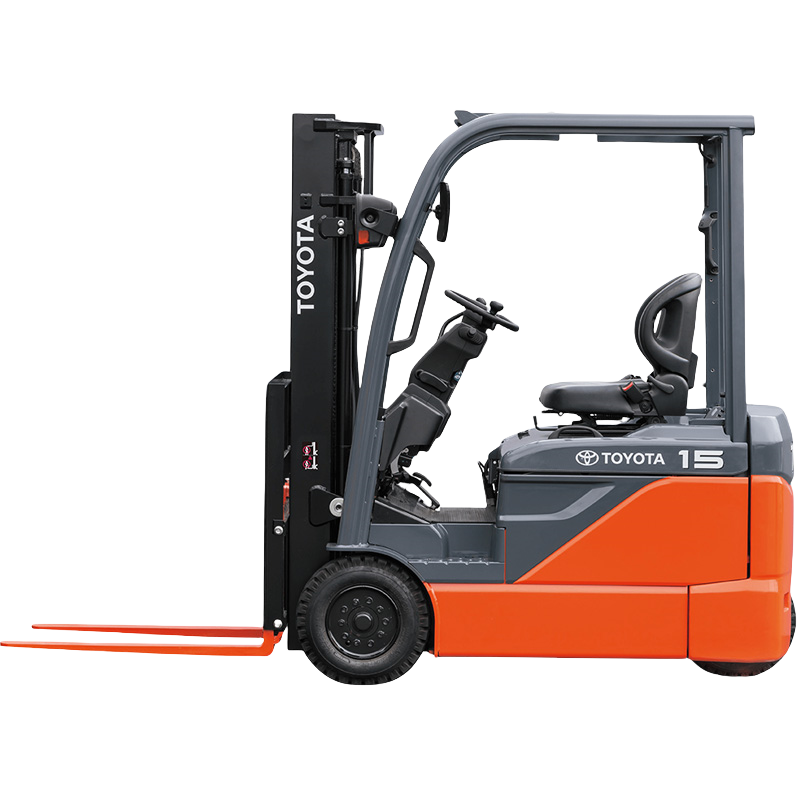
3. Electric Toyota Forklifts: The Silent Productivity Engine
Electric models represent the core of indoor operations for Toyota forklift users. Their main advantage is not absolute silence, but controlled and stable sound output combined with extremely low vibration levels.
Unlike internal combustion engines, electric forklifts generate a consistent motor tone that does not fluctuate under normal load changes. This creates a predictable acoustic environment that is ideal for long working hours in warehouses and distribution centers.
Another key factor is vibration reduction. Lower vibration not only improves comfort but also reduces fatigue in hands, arms, and lower back during extended shifts. This directly impacts productivity and operator safety.
Electric models are also widely preferred when companies decide to buy a Toyota forklift for indoor logistics. Their zero-emission nature allows them to operate in food storage, pharmaceutical facilities, and enclosed warehouses without ventilation concerns.
Overall, electric Toyota forklifts are not just quieter—they are structurally designed to support continuous human-machine interaction in confined environments, making them the most suitable option for long-hour indoor operations.
4. Internal Combustion Models: Controlled Noise, Context-Driven Use
Internal combustion Toyota forklifts—including diesel and gasoline versions—are traditionally associated with higher noise levels, but modern engineering has significantly refined their acoustic output.
Instead of harsh, unregulated engine noise, newer models produce more controlled combustion sound with reduced sharp peaks. Gasoline versions generally sound smoother than diesel ones, while diesel models are optimized for torque efficiency rather than acoustic softness.
However, their suitability for indoor long-hour operation depends heavily on environmental conditions. In well-ventilated spaces, they can operate efficiently, but in enclosed warehouses, noise accumulation and exhaust management become important considerations.
This is why many Toyota forklift dealer recommendations differentiate clearly between indoor electric use and mixed indoor-outdoor combustion use cases.
For high-intensity applications, diesel models still offer durability and continuous operation advantages. But for noise-sensitive environments, they are typically not the first choice when compared to electric alternatives.
5. Human Impact: Noise, Fatigue, and Warehouse Communication
Noise in warehouse environments is not just an acoustic issue—it is a human performance factor. In facilities using toyota forklift equipment, sound directly affects operator fatigue, communication efficiency, and safety awareness.
Continuous exposure to irregular or high-frequency noise increases cognitive load. Operators must work harder to filter irrelevant sound, which leads to faster mental exhaustion during long shifts.
Communication is another critical aspect. In busy warehouses, verbal instructions and warning signals must be clearly understood. Excessive or inconsistent forklift noise can interfere with these interactions, increasing the risk of operational errors.
Over time, even moderate noise levels can contribute to stress accumulation if the sound pattern is harsh or unstable. This is why modern warehouse design often prioritizes acoustic planning alongside layout optimization.
Well-engineered Toyota forklifts, especially electric models, help reduce these issues by maintaining a stable sound environment that supports long-hour human performance.
6. Indoor Suitability Matrix: When Toyota Forklifts Excel (and When They Don't)
The indoor suitability of Toyota forklifts depends less on brand and more on configuration and environment matching. Different warehouse types require different acoustic and operational profiles.
Electric forklifts excel in enclosed environments such as e-commerce warehouses, food storage facilities, and pharmaceutical clean rooms. Their low noise and zero emissions make them ideal for continuous indoor operation.
Internal combustion models, however, are better suited for semi-open or mixed-use environments such as loading docks and outdoor yards connected to warehouses. In these cases, durability and power delivery outweigh acoustic concerns.
The role of a Toyota forklift supplier or dealer becomes critical here, as proper configuration matching ensures operational efficiency and compliance with workplace safety standards.
In short, there is no universal “quietest forklift for all situations.” Instead, suitability depends on balancing noise, ventilation, workload intensity, and operating hours.
7. Choosing the Right Model: A Smart Buyer's Guide
When evaluating a Toyota forklift for sale, buyers should go beyond price and focus on operational context. The first factor is environment: fully indoor operations strongly favor electric models, while mixed environments may require combustion units.
Another consideration is attachment compatibility, including Toyota forklift forks, which determine handling flexibility for different pallet types and load shapes. Fork selection can indirectly influence operational efficiency and workflow smoothness.
Purchasing channels also matter. A certified Toyota forklift dealer typically offers better configuration matching, warranty support, and maintenance planning compared to general suppliers.
Meanwhile, a Toyota forklift supplier may provide broader model variety and pricing flexibility, especially for bulk procurement.
Ultimately, the best decision balances noise performance, workload demands, and long-term operating cost rather than focusing on a single specification.
8. FAQ: Toyota Forklift Noise and Indoor Use
Q1: Are Toyota forklifts quiet enough for indoor use?
Yes, especially electric models, which are designed for low-noise warehouse environments.
Q2: Which Toyota forklift type is the quietest?
Electric models are the quietest due to stable motor operation and low vibration.
Q3: Can diesel Toyota forklifts be used indoors?
Only in well-ventilated or semi-open environments; they are not ideal for enclosed long-hour use.
Q4: Do forklift forks affect noise levels?
Not directly, but worn or loose Toyota forklift forks can increase mechanical vibration and secondary noise.
Q5: How long can Toyota electric forklifts operate indoors?
Typically 6–8 hours depending on battery capacity and workload intensity.