
1. Introduction: The Real Concern Behind “Heat and Power Loss” in Forklifts
When businesses consider investing in a Toyota forklift, one of the most common concerns is whether the machine can sustain long hours of high-intensity work without overheating or losing power. This concern is especially relevant in industries such as logistics, manufacturing, and cold chain operations, where forklifts often run almost nonstop.
The fear usually comes from past experiences with lower-quality equipment. Many forklifts on the market tend to show signs of fatigue after prolonged use—slower lifting speeds, reduced travel speed, or even overheating shutdowns. Naturally, buyers searching for a Toyota forklift for sale want reassurance that they are making a reliable investment.
However, the reality is that not all forklifts are built the same. A new Toyota forklift is engineered with a fundamentally different approach—one that prioritizes sustained performance rather than short bursts of power. This distinction is crucial. Instead of asking whether a forklift can perform well initially, the real question should be: Can it maintain that performance over time?
This article takes a deeper, unconventional look at how Toyota forklifts behave under continuous high-load conditions. Rather than repeating generic claims, we will break down the engineering logic, real-world usage, and hidden factors that determine whether a forklift truly “gets tired.”
2. What “High-Intensity Continuous Operation” Really Means
When discussing whether a Toyota forklift will overheat or lose power, it's essential to first define what “high-intensity continuous operation” actually means. In real-world scenarios, this typically refers to forklifts running 8 to 16 hours per day with minimal downtime, handling frequent lifting, transporting heavy loads, and operating in demanding environments such as warehouses, ports, or manufacturing plants.
Unlike intermittent usage—where machines get natural cooling breaks—continuous operation places consistent thermal and mechanical stress on every component. Buyers looking to buy Toyota forklift often underestimate how critical this distinction is. A forklift that performs well in short cycles may struggle significantly when subjected to nonstop workloads.
Toyota approaches this challenge differently. Instead of designing forklifts for peak output in short bursts, their engineering focuses on maintaining stable performance over extended periods. This means temperature control, power consistency, and system durability are all optimized for endurance rather than temporary performance spikes.
Understanding this definition helps clarify why a Toyota forklift for sale is often positioned as a long-term productivity tool rather than just a piece of equipment. It's not about how fast it works initially—but how consistently it performs hour after hour.
3. Engineering Philosophy Behind Toyota Forklift Durability
The reason a new Toyota forklift rarely suffers from overheating or power loss lies in its engineering philosophy. Unlike many manufacturers that rely on third-party components, Toyota designs and integrates key systems in-house, including motors, controllers, and powertrains. This system-level integration allows for precise coordination between components, reducing inefficiencies and heat buildup.
For example, instead of simply installing a powerful motor, Toyota optimizes how that motor interacts with the controller and battery. This ensures that energy is used efficiently, minimizing unnecessary heat generation. A professional Toyota forklift supplier often emphasizes that this integration is one of the key reasons behind Toyota's long-term reliability.
Another critical aspect is redundancy in thermal management. Toyota doesn't rely on a single cooling mechanism but designs multiple layers of heat dissipation, ensuring stability even under continuous heavy loads. This approach explains why a Toyota forklift dealer can confidently recommend these machines for demanding applications.
Ultimately, Toyota's philosophy is simple but powerful: build forklifts that perform consistently under pressure, not just impress during initial use.
4. Electric Toyota Forklifts: Consistent Output Without Heat Build-Up
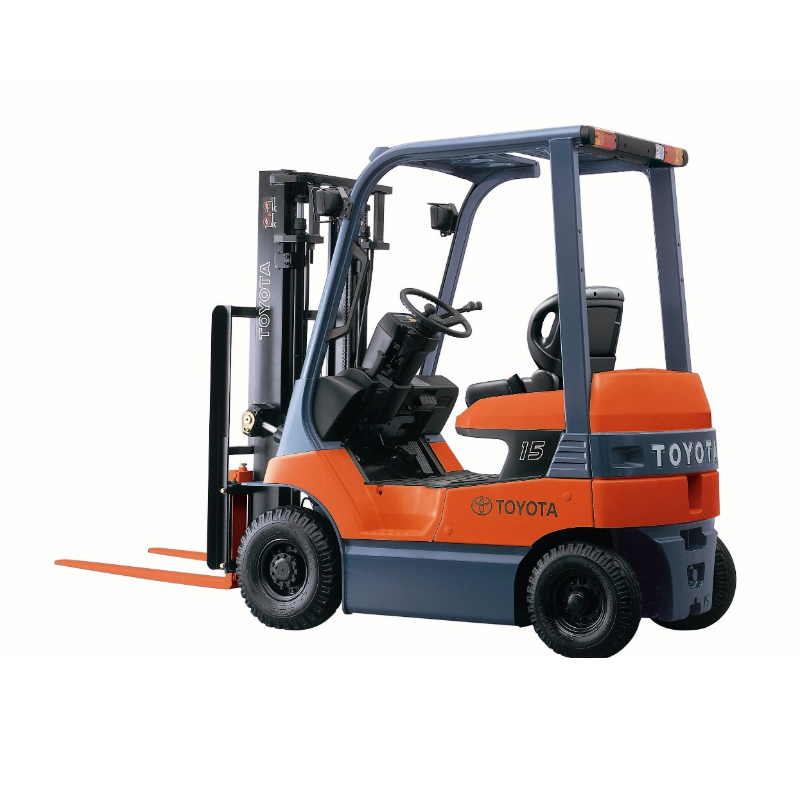
Electric models are often the first choice when browsing Toyota forklifts for sale, especially for indoor operations. A key advantage of electric Toyota forklift units is their ability to deliver consistent power output without significant heat buildup.
Toyota's electric forklifts use highly efficient motors paired with intelligent control systems. These systems continuously monitor temperature, load, and energy consumption, adjusting output in real time to prevent overheating. As a result, even during extended shifts, the forklift maintains stable speed and lifting performance.
One common misconception is that electric forklifts “get weaker” over time. In reality, performance drops are usually linked to battery charge levels rather than heat. As long as the battery is sufficiently charged, a new Toyota forklift can maintain consistent performance throughout the day.
For businesses planning to buy Toyota forklift for continuous operations, electric models offer a compelling combination of efficiency, stability, and low thermal stress.
5. Internal Combustion Toyota Forklifts: Stability Under Heavy Loads
For outdoor or extreme-duty environments, internal combustion models remain a popular choice among buyers searching for a Toyota forklift dealer. These forklifts are specifically engineered to handle heavy loads and long operating hours without overheating.
Toyota equips its IC forklifts with robust engines and large-capacity cooling systems. Radiators, coolant circulation, and airflow design all work together to maintain stable engine temperatures, even during continuous heavy-duty use. This ensures that performance remains consistent, without the gradual power loss seen in lower-quality machines.
Additionally, the hydraulic systems in these forklifts are built for endurance. Frequent lifting under load does not lead to overheating or sluggish response, which is critical for maintaining productivity.
A reliable Toyota forklift supplier will often recommend IC models for applications involving high loads, outdoor work, or extreme temperatures, where stability and durability are essential.
6. The Truth About “Power Loss”: It's Rarely What You Think
Many users assume that a Toyota forklift loses power due to overheating during continuous operation. However, in most real-world cases, what appears to be “power loss” is actually caused by external factors rather than the machine itself.
For electric forklifts, the most common reason is battery voltage drop. As the battery level decreases, the system automatically reduces output to protect components, which can feel like the forklift is becoming weaker. This is often misunderstood by buyers evaluating a Toyota forklift for sale.
For internal combustion models, perceived power loss may come from improper maintenance—such as clogged air filters, degraded engine oil, or cooling system inefficiencies. These issues are not design flaws but maintenance-related.
Another overlooked factor is operator behavior. Aggressive acceleration, overloading, or continuous improper usage can impact perceived performance. Even when you buy Toyota forklift, optimal results depend on correct usage.
In reality, Toyota forklifts are engineered to maintain stable performance. When power drops occur, they are usually signals of external limitations—not inherent machine weakness.
7. Heat Management System: The Hidden Hero
One of the most overlooked strengths of a new Toyota forklift is its advanced heat management system. While many brands focus on horsepower or lifting capacity, Toyota prioritizes thermal stability as a core design principle.
The system includes optimized airflow channels, high-efficiency radiators, and intelligent thermal monitoring. Instead of reacting to overheating, Toyota forklifts are designed to prevent heat accumulation from the start. This proactive approach ensures consistent operation even during long working hours.
A toyota forklift supplier will often highlight that these systems are not isolated components but part of a fully integrated design. The motor, controller, and cooling system work together to maintain optimal temperature balance.
Compared to lower-end machines, which often rely on basic cooling solutions, Toyota's multi-layer heat control significantly reduces the risk of thermal fatigue. This is why a Toyota forklift dealer can confidently recommend these machines for demanding environments.
8. Real-World Performance: 8–16 Hours Nonstop Operation
In real-world applications, a Toyota forklift is often expected to operate continuously for 8 to 16 hours per day. Industry feedback consistently shows that these machines maintain stable performance throughout long shifts without overheating or noticeable power loss.
This is particularly evident in logistics centers and manufacturing plants, where forklifts rarely get extended downtime. Businesses searching for a Toyota forklift for sale often prioritize reliability over raw specifications—and Toyota consistently delivers in this regard.
Even in high-temperature environments, such as summer warehouse operations, Toyota forklifts demonstrate strong thermal stability. Unlike some competitors that experience performance degradation, Toyota machines maintain consistent lifting speed and travel efficiency.
A trusted Toyota forklift dealer will often cite these real-world results as proof of durability. The ability to perform reliably under continuous load is what separates Toyota from many other brands in the market.
9. Toyota Forklift Forks & Hydraulic Systems Under Stress
The performance of a Toyota forklift under continuous operation is not only about the engine or motor—it also depends heavily on structural components like Toyota forklift forks and the hydraulic system.
Toyota forklift forks are engineered for optimal load distribution, reducing stress concentration during lifting. This minimizes energy loss and prevents unnecessary strain on the hydraulic system, which in turn reduces heat generation.
The hydraulic system itself is designed for long-duration use. Even under frequent lifting cycles, it maintains smooth and responsive operation without overheating or lag. This is a critical advantage for industries that require precision and efficiency.
When evaluating a Toyota forklift, many buyers overlook these components. However, they play a significant role in ensuring that the machine does not “feel tired” even after extended use.
10. Maintenance vs. Machine Capability
Even the most advanced Toyota forklift cannot perform optimally without proper maintenance. Many cases of overheating or reduced performance are linked to neglected servicing rather than design limitations.
Key maintenance points include checking coolant levels, replacing engine oil, cleaning radiators, and ensuring battery health. A reliable Toyota forklift supplier will always emphasize the importance of routine inspections.
Buyers who buy Toyota forklift expecting zero maintenance issues may face disappointment—not because of the machine, but due to unrealistic expectations. Like any industrial equipment, performance depends on both design and care.
When properly maintained, Toyota forklifts rarely exhibit overheating or power loss, even under continuous high-intensity operation.
11. Buying Advice: Choosing the Right Model
When selecting a Toyota forklift for sale, it’s important to match the model to your working conditions. Electric forklifts are ideal for indoor, long-duration operations, while internal combustion models are better suited for outdoor and heavy-load tasks.
A professional Toyota forklift dealer can help analyze your workload, environment, and operational requirements. This ensures you choose a model that maintains consistent performance under your specific conditions.
Before you buy Toyota forklift, consider factors such as operating hours, load weight, and environmental temperature. These directly impact long-term performance.
Working with a trusted Toyota forklift supplier ensures not only the right machine but also ongoing support and maintenance guidance.
12. Conclusion: Built for Endurance, Not Just Performance
A Toyota forklift is not designed to deliver short bursts of power—it is built for endurance. Under normal conditions and proper maintenance, it will not overheat or lose power during continuous high-intensity operation.
This is why Toyota forklifts are widely regarded as one of the most durable and reliable options in the industry. Whether you are browsing a Toyota forklift for sale or planning to buy a Toyota forklift, the key takeaway is clear: stability over time is where Toyota truly excels.