

1. Rethinking Value — When a Used Toyota Forklift Is Actually a Smart Investment
A used Toyota forklift is not simply a cheaper version of a new machine—it is a remaining-life asset. The real question is not “how cheap is it?” but “how much productive life is still left in it under your working conditions.”
A well-maintained second-hand Toyota forklift can still perform close to new equipment because Toyota designs its forklifts with long service cycles in mind. Key systems like the mast, hydraulic lines, chassis frame, and transmission are engineered for durability rather than short-term replacement.
This is why in real industrial environments, many companies deliberately choose used equipment when three conditions are met:
First, when workload is stable and predictable, such as warehouse storage, logistics sorting, or light manufacturing. Second, when capital efficiency matters more than brand-new assets, especially for growing businesses. Third, when the forklift is used as a support unit rather than a core production bottleneck.
A used forklift Toyota in the 3–5 year range with documented maintenance history often delivers 80–90% of new-machine performance at significantly lower acquisition cost. That gap is where the real ROI comes from.
However, value only exists when condition is verified. A poorly selected used Toyota forklift for sale can quickly turn into downtime cost rather than savings. That is why experienced buyers always evaluate lifecycle compatibility first, not price tags.
2. The Hidden Truth Behind “Good Deals” in the Used Forklift Market
The used forklift market often appears simple: lower price equals better deal. In reality, pricing is one of the least reliable indicators of machine condition.
A second-hand Toyota forklift for sale can be misleading because cosmetic refurbishment is common. Fresh paint, replaced seat covers, or polished forks can hide deep mechanical fatigue. Even more importantly, operating hours can be reset or misrepresented, making it difficult to judge true wear levels.
Another hidden factor is workload history. Two forklifts with identical appearance can have completely different internal conditions depending on whether they worked in continuous warehouse shifts or light occasional use.
This is why experienced buyers never evaluate a used Toyota forklift based on appearance alone. They focus on consistency signals: wear patterns on pedals, mast alignment, hydraulic response speed, and engine or motor sound stability.
The market reality is simple: good deals exist, but only when condition transparency is higher than price attraction. Otherwise, the “cheap unit” often becomes the most expensive asset after repair cycles begin.
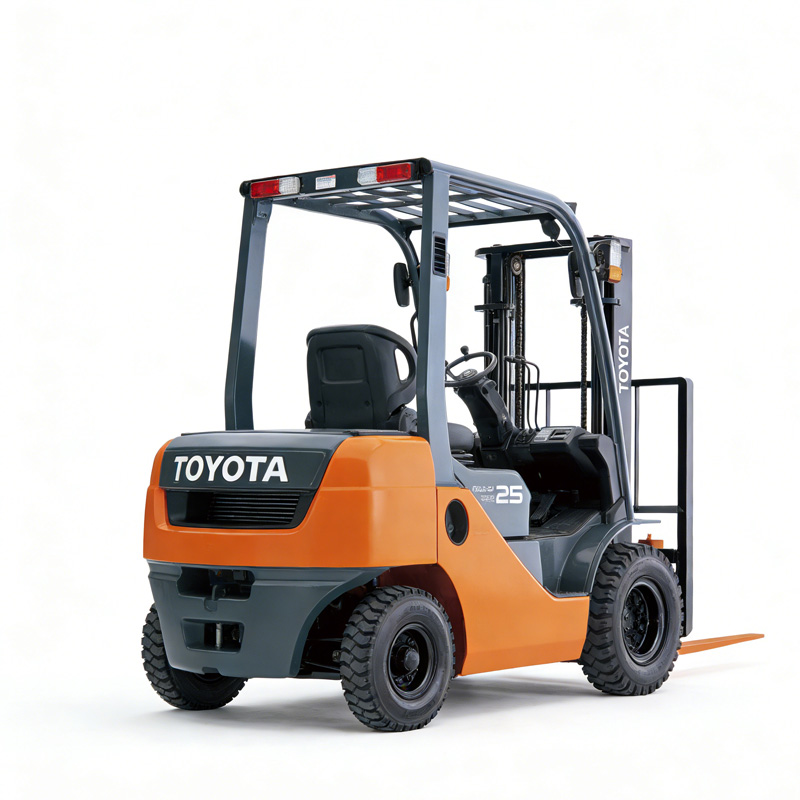
3. The 3-Layer Condition Check System (Beyond Traditional Inspection Lists)
Most buyers inspect forklifts in a fragmented way—checking tires, engine sound, and hydraulics separately. A more reliable method is to use a structured 3-layer system that reflects real operational risk.
Layer 1: Identity Integrity (Is this machine what it claims to be?)
This includes serial number verification, chassis plate consistency, and service record traceability. A mismatch here usually indicates reconstruction or undocumented ownership transfer.
Layer 2: Mechanical Health (Can it still perform under load?)
This layer focuses on the core systems: hydraulic stability, mast smoothness, steering response, and power consistency. Any hesitation, vibration, or delay signals hidden wear.
Layer 3: Behavioral Performance (How does it behave in real work?)
Instead of static inspection, this layer tests real operation: lifting under load, braking under stress, turning while loaded, and continuous cycling. Many issues only appear under workload pressure, not idle testing.
Using this 3-layer approach helps separate a visually “good” used forklift Toyota from a truly reliable one.
4. Where You Buy Matters More Than What You Buy
In the used forklift market, the supplier is often more important than the machine itself.
Buying from a certified Toyota forklift dealer or established Toyota forklift supplier significantly reduces risk because these channels typically follow standardized inspection, refurbishment, and documentation processes.
In contrast, informal sellers often prioritize turnover speed over lifecycle quality. The same used Toyota forklift for sale can have completely different reliability depending on whether it passed a structured inspection process.
Authorized suppliers also provide hidden value: service history access, replacement parts support, and sometimes limited warranty coverage. These factors directly influence downtime risk, which is often more expensive than purchase price differences.
In short, choosing the right source is a risk-control decision, not just a buying decision.
5. Pricing Strategy & Lifecycle Cost Thinking
The biggest mistake buyers make is focusing on purchase price instead of total lifecycle cost.
A cheaper used forklift Toyota may require early battery replacement, hydraulic repair, or transmission servicing, quickly eliminating initial savings.
A more accurate approach is to calculate:
● Purchase price
● Expected maintenance cost
● Downtime risk cost
● Remaining usable years
When evaluated this way, a mid-priced second-hand Toyota forklift with stable condition often becomes more economical than the cheapest option.
Negotiation should also reflect condition, not emotion. Wear level, battery health, and service gaps should directly translate into price adjustments.
6. Who Should Buy a Second-Hand Toyota Forklift (and Who Shouldn’t)
A used Toyota forklift for sale is suitable for buyers who prioritize operational balance rather than absolute perfection.
Good fit:
● Warehouses with predictable workload
● Businesses scaling operations
● Users with moderate daily usage (4–8 hours)
● Buyers with access to inspection expertise or trusted suppliers
Poor fit:
● Zero-downtime industries
● High-intensity 24/7 operations
● Buyers without inspection capability
● Harsh environments with extreme wear conditions
The key distinction is risk tolerance. If downtime is unacceptable, new equipment is still the better choice.
7. FAQ
Q1: Is a used Toyota forklift reliable?
Yes, if maintenance history is verified and wear is within acceptable limits.
Q2: How many hours is too much?
It depends on usage type, but consistent heavy-duty use above 10,000 hours requires careful inspection.
Q3: Should I buy from a dealer or private seller?
A Toyota forklift dealer or certified Toyota forklift supplier is generally safer.
Q4: What is the lifespan of a second-hand Toyota forklift?
With proper condition, it can operate several additional years, often 3–7 depending on usage.
Q5: How do I avoid risky units?
Focus on documentation consistency, load testing, and real operating behavior—not appearance.
Contact Us