
1. Toyota’s Stability and Build Quality: Built for Continuous Use
Durability is the foundation of long-term fleet value. A Toyota Warehouse Forklift is engineered with robust chassis design, high-quality hydraulic components, and proven manufacturing standards that reduce downtime and extend service intervals. The result is a lower total cost of ownership (TCO) because fewer breakdowns mean less emergency maintenance and predictable lifecycle replacement planning.
Why it matters: For high-throughput warehouses where forklifts run multiple shifts daily, a well-built toyota forklift translates into fewer interruptions and steadier operational KPIs.
2. Advanced Safety Systems — SAS (System of Active Safety)
Safety is non-negotiable. Toyota’s System of Active Safety (SAS) and other built-in protections address stability, braking, and operator-awareness. Features like automatic speed reduction while turning, enhanced mast control, and improved visibility packages reduce the risk of tip-overs and collisions.
Practical benefit: Fewer accidents, lower insurance costs, and improved compliance with workplace safety standards. A responsible toyota forklift dealer will also help configure the right safety options for your facility layout and load types.
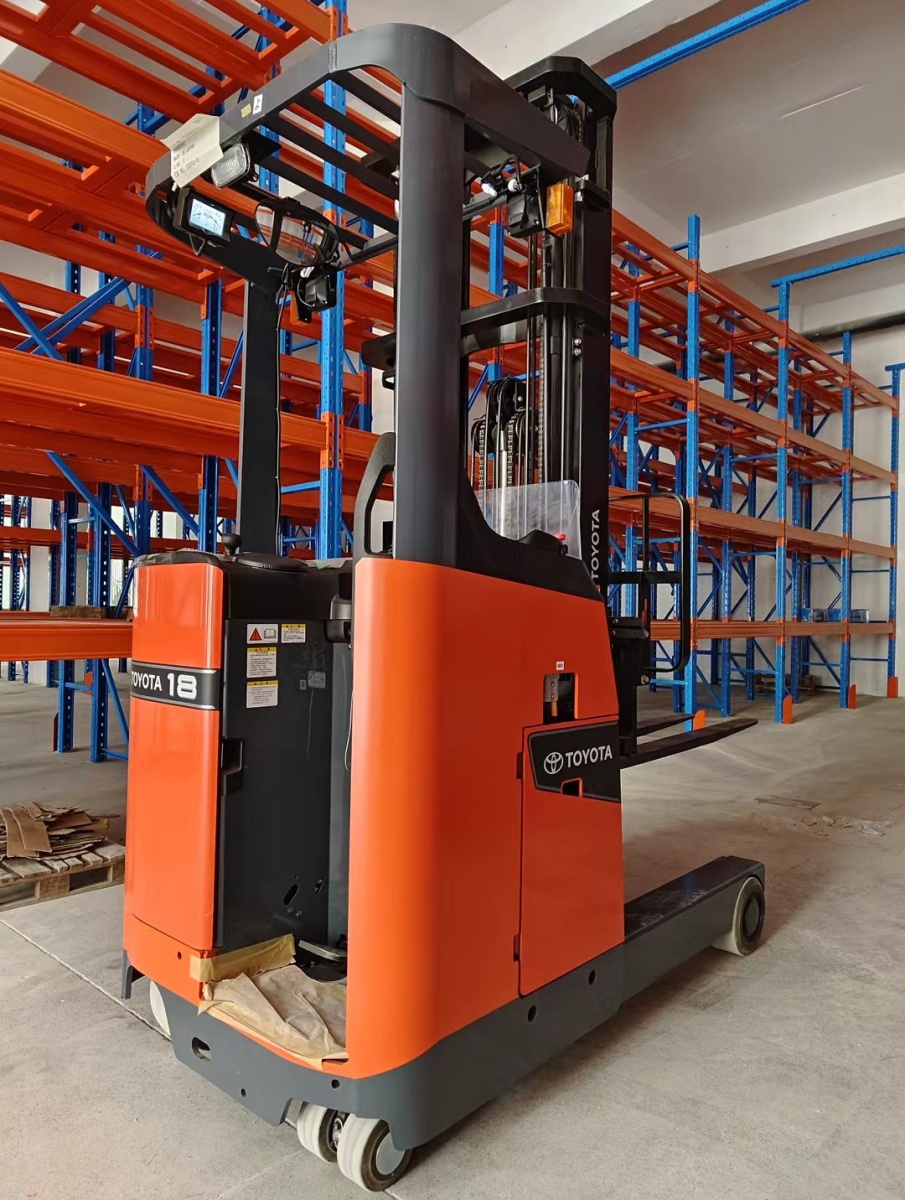
3. Powertrain Options & Efficiency — Electric, LPG and Diesel
Warehouses have diverse needs: indoor distribution centers often require zero-emission, quiet electric trucks; outdoor yards sometimes need diesel or LPG for range and power. Toyota provides a spectrum of powertrains — high-efficiency electric models with long-lasting batteries, LPG units with fast refueling, and diesel options for heavy-duty outdoor tasks.
How this helps: Matching powertrain to application reduces energy costs and optimizes uptime. For many businesses, an electric Toyota Warehouse Forklift offers the best blend of performance and lower emissions in indoor environments.
4. Operator-Centric Design: Ergonomics, Controls, and Productivity
Operator comfort directly affects throughput and error rates. Toyota focuses on ergonomics: intuitive controls, adjustable seating, low-vibration cabins, and excellent sightlines. These design choices reduce operator fatigue, improve precision in handling and stacking, and increase daily productive hours.
Operational insight: A productive, less-fatigued operator makes fewer mistakes, handles loads faster, and requires less retraining — a subtle but powerful ROI driver for any fleet.
5. Fleet Management & Telematics (Connected Intelligence)
Modern warehouses demand data. Toyota’s fleet management and telematics solutions deliver actionable insights — usage patterns, maintenance schedules, battery health, and driver behavior analytics. With this data you can schedule preventive maintenance, optimize asset allocation, and spot training opportunities.
Implementation note: Work with a certified toyota forklift dealer to deploy telematics that integrate with your warehouse management system (WMS) and to interpret data into operational changes.
How to Choose the Right Toyota Warehouse Forklift for Your Facility
Selecting the correct model requires evaluating a few key variables:
-
Load profile: average weight, peak weight, pallet dimensions.
-
Operating environment: indoor vs. outdoor, racking heights, aisle width.
-
Cycles and shifts: single-shift vs. 24/7 operations.
-
Emission & noise constraints: cleanroom/indoor areas often require electric.
-
Service & parts access: choose a local toyota forklift dealer with certified technicians.
A reputable toyota forklift dealer will perform site surveys, offer comparisons (capacity, mast type, attachments), and provide lifecycle cost analysis.
Conclusion — Investment That Pays Back
A Toyota Warehouse Forklift is more than a lift truck; it’s an operational asset engineered to reduce risk, lower lifecycle costs, and increase throughput. From the proven structural engineering to SAS safety systems and modern telematics, these forklifts are optimized for modern warehouse demands. Partnering with an experienced toyota forklift dealer ensures you specify the right model, powertrain, and service package to maximize ROI.
Contact your local toyota forklift dealer today for a site assessment, demo, and a tailored fleet plan that aligns with your KPIs and budget.