
When optimizing warehouse picking operations, the right equipment makes the difference between steady throughput and chronic bottlenecks. Toyota's order picker forklifts (commonly marketed under the 8-series / 8FBP family) are engineered specifically for high-level, case-and-piece picking in modern distribution centers. Below I explain the technical strengths, operational benefits, and real-world ROI reasons warehouses choose Toyota order pickers — with practical guidance to help you evaluate whether one is the right fit for your operation.
1) High reach and stable handling (safer, faster picks)
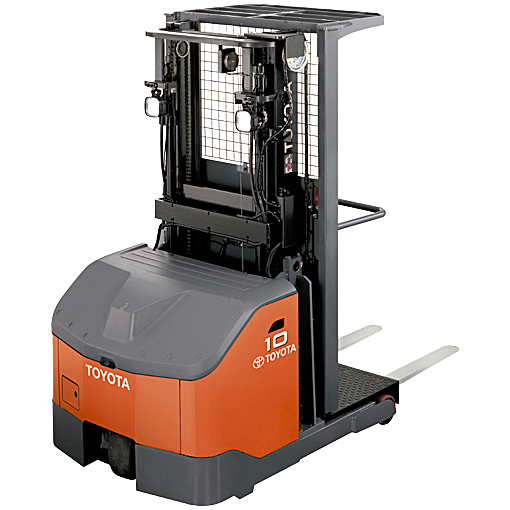
Toyota order pickers are specified to reach very high rack levels (Toyota lists models with lift heights up to ~390 inches) while retaining travel stability and comfortable operator staging. For operations picking from high levels, this reduces the need for mezzanines or manual ladders and speeds per-pick time because operators are working from a stable, purpose-built platform.
2) Range of models and capacities for different workloads
The Toyota 8FBP series provides multiple capacity and chassis options to match SKU weight and picking style — typical model capacities range from lower-capacity (≈700 kg) up to 1,500 kg and the family includes variants tailored for furniture, general case picking, and higher payloads. This modularity means you can choose a unit optimized for your product mix rather than overpaying for excess capacity.
3) Narrow-aisle performance increases storage density
Order pickers are designed to work in tighter aisles than many common lift trucks, letting you push racks closer together and increase cubic storage within the same footprint. Toyota offers guidance systems (wire or rail guidance) and compact chassis options that minimize rack contact and make high-density layouts practical while maintaining safety. For warehouses aiming to increase pallet/rack density without expensive automation, this is a major win.
4) Productivity features that reduce cycle time
Toyota integrates features that directly impact picker productivity: on-board diagnostics to minimize downtime, AC drive and lift motors for smooth control and lower maintenance, and options such as Lift Logic (which optimizes travel speed based on lift height). These features reduce variability in pick times and allow operators to work faster with fewer interruptions.
5) Operator comfort, safety, and ergonomics
Reduced fatigue = fewer mistakes and higher throughput. Toyota's cushioned mast staging, ergonomic operator platforms, and visibility-focused design help pickers maintain speed and accuracy through long shifts. Safer, more comfortable operators also lower training time and staff turnover — a hidden but important part of total cost of ownership.
6) Lower total cost of ownership (TCO) vs. ad-hoc solutions
When you compare an order picker to improvised solutions (lifts + ladders, man-up attachments, or oversized forklifts used inappropriately), the picker typically wins on TCO. Key drivers: fewer product damages (because the unit is designed for racking interaction), lower maintenance with modern electric drive systems, and higher throughput per labor hour. Pairing Toyota’s dealer network for service and parts also reduces downtime risk in global supply chains.
7) How to choose the right Toyota order picker for your site
Quick selection checklist:
● Picking height: match maximum lift height to your top shelf plus comfortable staging clearance. (Toyota offers up to ~390 in. in some models.)
● Payload: choose a capacity that handles your heaviest single pick plus a safety margin (use the model table to select 700–1,500 kg options as needed).
● Aisle width & guidance: if you plan higher rack density, consider wire/rail guidance options and verify turning radii for tight aisles.
● Product mix & attachments: bulky furniture or irregular loads may need furniture-specific variants; inventory with many small SKUs benefits from pick-to-light or scanning integrations.
●Ergonomics & safety options: check for cushioned staging, fall protection, integrated diagnostics and operator aids.
8) Buying considerations — how to evaluate price and availability
When researching Toyota order picker price and Toyota order picker for sale listings, follow these steps:
● Define your pick profile: average pick height, SKU dimensions, and picks/hour target.
● Compare apples-to-apples: match lift height, platform configuration, battery type, and accessories.
● Factor TCO: energy, parts, service plan, warranty length, and estimated resale.
● Ask dealers about demo units and references: on-site trials reveal real productivity gains.
● Consider certified preowned options for quicker delivery and lower capital outlay.
A short checklist comparing models on ergonomics, lift speed, battery runtime, and safety features will make the buying decision objective and defensible.
9) Maintenance & training — extend life, protect investment
To maximize ROI from a Toyota order picker forklift:
●Follow manufacturer service intervals and use OEM parts.
●Train pickers on safe elevated operation and proper battery care.
●Use telematics to spot under-utilized or over-stressed units and adjust fleet size.
A proactive maintenance and training program lowers repair costs and increases fleet reliability.
Conclusion — when Toyota order pickers make sense
If your operation requires regular access to medium-to-high racking, seeks to increase storage density, or needs to boost per-picker throughput with lower damage and downtime risk, a purpose-built Toyota order picker is a strong option. Toyota’s combination of high lift capability, model variety (8FBP family), and productivity features delivers measurable improvements in safety, speed, and TCO — provided you match the model to your picking profile and pair the truck with modern picking processes.