
In the field of industrial logistics equipment, Toyota forklifts consistently stand out as the preferred choice for businesses worldwide due to their "technical reliability" and "all-scenario adaptability." This is not only backed by a century of manufacturing expertise but also by a comprehensive value chain, from product design to after-sales service. The competitive advantages of Toyota forklifts are analyzed below from three dimensions: core technology, scenario adaptability, and total cost of ownership (TCO).
I. Technical Genes: The Underlying Logic Reconstruction of a Manufacturing Giant
Toyota Forklift's technical barriers stem from its deep deconstruction of the essential needs of "material handling." As one of Toyota Group's core businesses, it injects the lean manufacturing philosophy of automobile manufacturing into forklift R&D, forming a unique technical system.
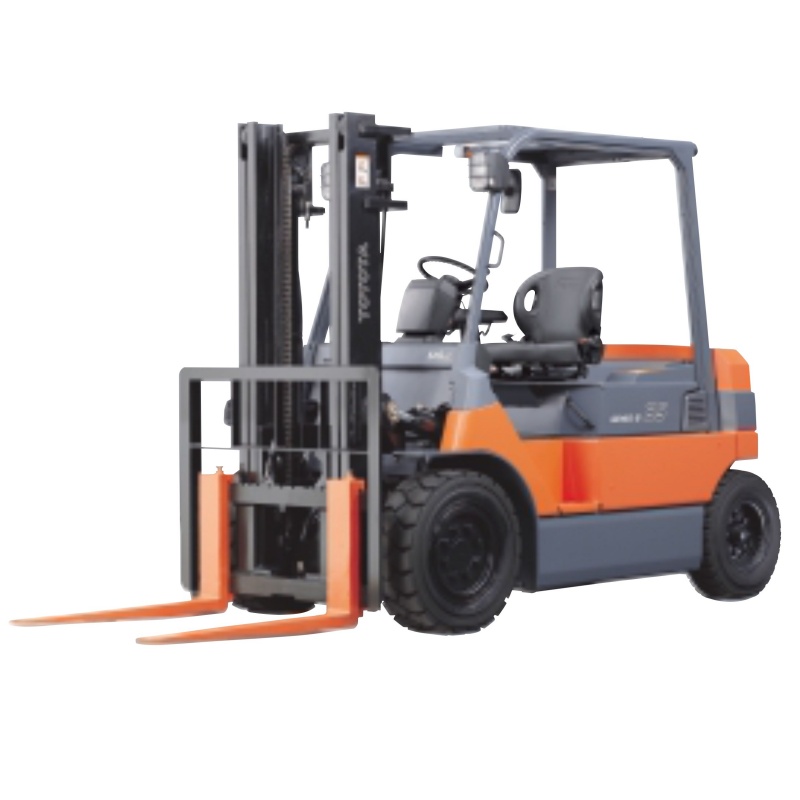
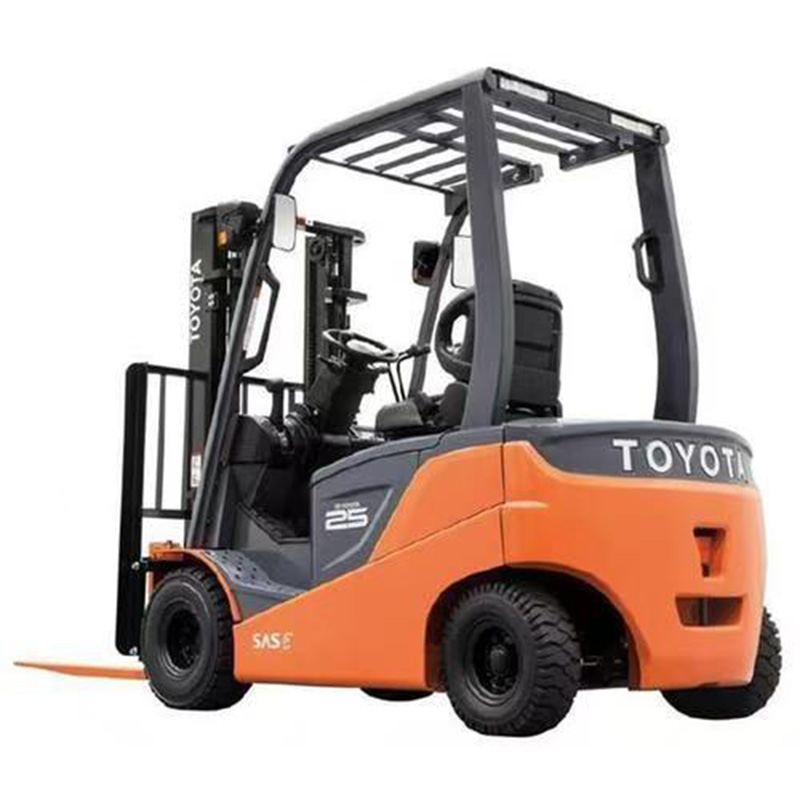
In terms of power systems, Toyota electric forklifts are equipped with AC motors, which achieve a 15% increase in energy conversion efficiency through permanent magnet synchronous technology. Coupled with an intelligent energy recovery system, the battery life is extended by 2-3 hours compared to traditional DC motors. Taking the 7FB series electric counterbalanced forklift as an example, its lithium battery pack supports fast charging technology, allowing 30 minutes of charging to meet 8 hours of continuous operation, completely solving the "charging waiting" pain point of traditional lead-acid batteries.
Precise control of the hydraulic system is another major advantage of Toyota. The mast lifting adopts "progressive hydraulic buffering" technology, which automatically decelerates when the goods are 30 centimeters off the ground, avoiding cargo shaking caused by inertia; the fork tilt angle control accuracy reaches ±0.5°, maintaining horizontal stability even when handling precision instruments. This "millimeter-level control" capability comes from Toyota's experience in hydraulic tuning accumulated in automotive suspension systems.
The integrated design of safety technology further reflects Toyota's systematic thinking. Its unique SAS (System of Active Stability) monitors vehicle speed and steering angle in real-time through on-board sensors. When the forklift's speed exceeds the safety threshold during turning, the system automatically cuts off power output and issues an alarm; while AICS (Active Integrated Control System) dynamically adjusts hydraulic pressure when the mast is lifted, reducing the risk of rollover by more than 40%.
II. Scenario Adaptability: Building an Ecosystem from Standard Products to Customization
Toyota Forklift's competitiveness lies not only in the performance of a single product but also in its ability to provide industry-wide scenario solutions.
In the warehousing and logistics sector, to meet the demands of e-commerce warehouses for "high turnover and narrow aisles," Toyota launched the BT Reflex series of narrow-aisle forklifts, with a minimum turning radius of only 1.6 meters. Coupled with a laser navigation system, it can achieve fully automated storage and retrieval in 2.5-meter wide aisles. After a large e-commerce logistics center introduced this series, warehouse space utilization increased by 30%, and picking efficiency improved by 25%.
In manufacturing scenarios, Toyota's customized AGV (Automated Guided Vehicle) forklifts for automotive production lines, by interfacing with the MES (Manufacturing Execution System), achieve "zero-wait" material delivery. After a Japanese automotive factory adopted Toyota AGVs, production line downtime decreased from 8 hours per month to 1.5 hours, and material delivery error rates dropped to 0. Its integrated RFID identification technology can automatically identify material requirements for different vehicle models, enabling flexible production adaptation.
Cold chain logistics is another strength of Toyota. In low-temperature environments of -30℃, Toyota's cold storage forklifts use special anti-freeze coatings and heating systems, and the hydraulic oil uses food-grade low-temperature media, ensuring 48 hours of continuous operation without failure in quick-freezing warehouses. A comparative test by a fresh food distribution center showed that the equipment failure rate of Toyota's low-temperature forklifts was only 1/3 of similar products.
III. TCO Optimization: The Invisible Competitiveness of Full Lifecycle Cost
Companies that choose Toyota forklifts often value their long-term cost advantages. The Total Cost of Ownership (TCO) model shows that the comprehensive cost of Toyota forklifts over a 5-year usage cycle is 20-30% lower than similar products.
In terms of energy consumption costs, Toyota electric forklifts consume 8-10 kWh per 100 kilometers. Based on industrial electricity prices, annual energy costs save approximately 12,000 yuan compared to diesel forklifts. Their lithium battery design life reaches 2000 charge-discharge cycles, equivalent to 5 years of maintenance-free use, while traditional lead-acid batteries typically need to be replaced every 2 years, with a single replacement cost of about 5,000 yuan.
The control of maintenance costs further reflects Toyota's design prowess. Its engine adopts "long oil change" technology, extending the maintenance interval from 500 hours to 1000 hours, reducing annual maintenance times by 50%; the modular design allows 90% of parts to be replaced independently. Data from a logistics company shows that the average annual maintenance cost of Toyota forklifts is 40% lower than the industry average.
Residual value is another key indicator of TCO. Toyota forklifts, relying on brand premium and quality reputation, have a used residual value rate of 55-60% after 5 years of use, while similar products are usually below 40%. The head of a warehousing company calculated: "Although the unit price of Toyota forklifts is 15% higher at the time of purchase, 5 years later, 30% more of the cost is recovered when sold, making it more cost-effective overall."
Choosing Toyota forklifts is essentially choosing a "full value chain empowerment" cooperation model – from technical reliability assurance, to scenario-based customized services, to long-term value optimization at the cost level. In the context of Industry 4.0, this ability to deeply integrate "automotive-grade manufacturing standards" with "logistics scenario demands" is the core secret of Toyota Forklift's continuous leadership in the industry. For enterprises pursuing efficiency and stability, Toyota forklifts are not just equipment, but a strategic choice to enhance supply chain competitiveness.