

In the field of logistics warehousing and industrial handling, forklifts play an indispensable role. As two common types of forklifts, counterbalance forklifts and warehouse forklifts have unique application scenarios and characteristics. The following analyzes their professional applications and differences from multiple aspects such as structural design, functional applications, and work environment adaptability.
Counterbalance Forklifts
1. Structural Features
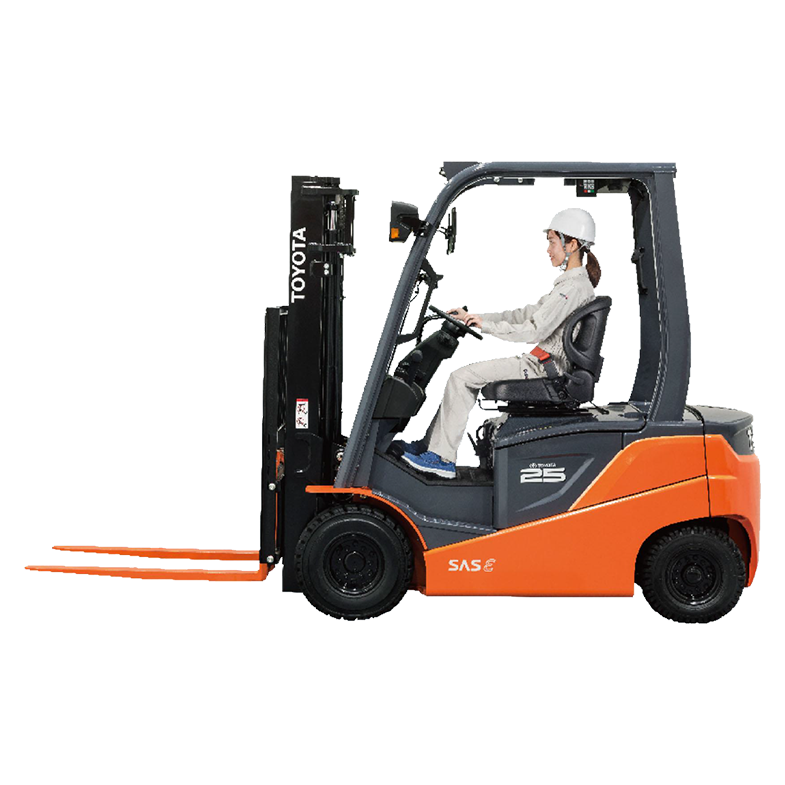
Counterbalance forklifts have a long and wide body with a large tonnage, typically ranging from 1 to 10 tons or more. The core of their design is a counterweight block at the rear, which balances the load weight to ensure stability during heavy-duty operations and prevent the vehicle from tipping over. For example, when loading/unloading heavy goods such as large mechanical equipment or heavy industrial raw materials, the counterweight block keeps the forklift body stable even when carrying several tons of goods, preventing loss of control due to forward tilting of the load.
2. Functional Applications
Mainly used for flat-ground handling, such as in large factory workshops, open areas of logistics warehouses, port terminals, and other flat and open areas. They excel at handling large and heavy goods, such as large steel materials and precast concrete components. During loading/unloading, they can efficiently move goods from the ground to transport vehicles or unload them from vehicles to designated storage locations. The lifting height of their forks generally meets conventional stacking needs, usually several meters, sufficient for stacking goods on ordinary shelves.
Equipped with various attachments, their functions become more versatile. For example, installing a clamp attachment allows handling of barrel-shaped goods; adding a side shifter facilitates precise positioning of goods between the vehicle and shelves, enhancing operational flexibility and efficiency to meet the handling and stacking needs of different heavy goods.
3. Work Environment Adaptability
Suitable for solid and flat ground, they can operate stably on both cement floors and hardened industrial sites. However, in complex terrains such as rough or steep slopes, their operational efficiency decreases, and safety risks increase. However, some improved counterbalance forklifts are equipped with devices like differential locks to enhance passability and stability on certain slopes or soft ground, expanding their application boundaries.
Warehouse Forklifts
1. Structural Features
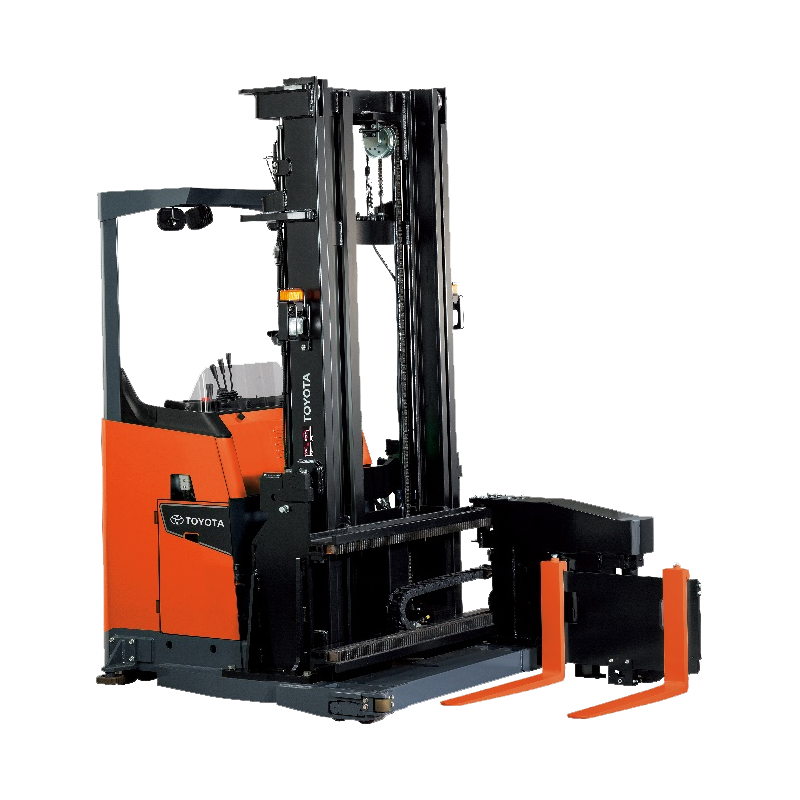
Warehouse forklifts have a short and compact body with relatively small tonnage, generally around 1 to 3 tons. Their narrow body design allows them to maneuver flexibly in narrow aisles, especially suitable for operating in warehouse shelf areas. Their lifting mechanism is designed for high lifting heights, with some models capable of reaching over ten meters, enabling them to place goods at the top of high shelves and fully utilize the vertical space of the warehouse.
2. Functional Applications
Focused on in-plant handling and goods storage/retrieval in shelf areas. For example, in automated stereo warehouses, warehouse forklifts can accurately store goods in multi-layer shelves or retrieve goods from shelves for sorting and distribution in limited aisle widths (often around 2 to 3 meters). Their high lifting capacity allows warehouses to build multi-layer storage structures, greatly improving storage capacity, achieving dense goods storage, reducing warehouse floor space, and optimizing space utilization.
3. Work Environment Adaptability
Specifically designed for indoor warehousing environments, they require high ground flatness to ensure smooth driving and precise operation in narrow aisles. In warehouses with shelf systems, rail-type warehouse forklifts need to run along predetermined tracks to ensure operational standardization and safety. With technological advancements, however, some warehouse forklifts with trackless navigation functions (such as laser navigation or magnetic stripe navigation) can operate flexibly in slightly more complex warehouse layouts, adapting to more diverse warehousing environments.
Differences Between Counterbalance Forklifts & Warehouse Forklifts
1. Body Size and Tonnage
Counterbalance forklifts are large in size and tonnage, capable of carrying heavy goods; warehouse forklifts are compact and lightweight, with relatively smaller load capacity, prioritizing mobility in limited spaces.
2. Functional Focus
Counterbalance forklifts focus on long-distance handling and loading/unloading of large heavy goods on flat ground; warehouse forklifts focus on short-distance handling and goods storage management in high-shelf areas, with a significant advantage in lifting height.
3. Work Environment Requirements
Counterbalance forklifts are mainly used in open and flat sites, with limitations in complex terrains but partial adaptability through improvements; warehouse forklifts highly depend on flat indoor warehousing environments, especially in shelf areas with strict requirements for aisle dimensions and ground flatness, though new navigation technologies have expanded their application scenarios.
Counterbalance forklifts and warehouse forklifts each have distinct roles in the logistics and warehousing system. Counterbalance forklifts are the "heavy lifters" for outdoor heavy goods handling and loading/unloading, while warehouse forklifts serve as the "precision workers" for indoor goods storage and efficient management. In practical applications, enterprises should reasonably select and configure forklifts based on their operational scenarios, goods characteristics, and warehouse layouts to achieve efficient coordination in logistics handling and warehousing operations and improve overall operational efficiency.