
1. Why Safety Defines the Value of a Toyota Forklift
In today's industrial landscape, safety is no longer an optional feature—it is a core investment metric. When businesses evaluate a Toyota forklift for sale, they are not just comparing lifting capacity or price, but also assessing how well the machine protects operators, goods, and infrastructure.
A modern Toyota forklift integrates safety into every layer of its design. From intelligent control systems to structural balance, safety directly impacts operational efficiency, insurance costs, and employee confidence. Choosing to buy Toyota forklift equipment is often a decision driven by long-term risk reduction rather than short-term savings.
2. What Causes Forklift Accidents? A Reality Check
To understand how effective Toyota's anti-tip and anti-drop systems are, we must first examine why accidents happen. Forklifts are inherently unstable machines due to their elevated loads and shifting centers of gravity.
Rollovers typically occur during sharp turns, excessive speed, or high-load lifting. Meanwhile, falling cargo often results from abrupt hydraulic movements, uneven forks, or poor load positioning. Many traditional forklifts lack real-time correction mechanisms, making them highly dependent on operator skill.
This is where a new Toyota forklift begins to redefine expectations—by reducing reliance on human reaction and introducing intelligent intervention.
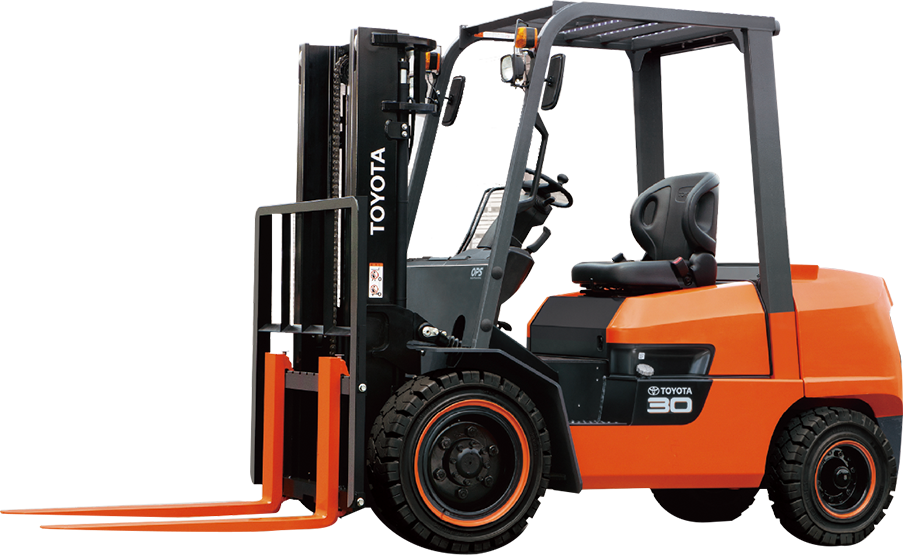
3. Toyota Forklift's Safety Philosophy: Designed to Prevent, Not React
Unlike many manufacturers that focus on damage control, Toyota approaches safety with a preventive mindset. The goal is not to minimize accidents after they occur—but to avoid them entirely.
A Toyota forklift supplier typically emphasizes integrated safety systems that monitor and adjust performance in real time. Instead of relying solely on alarms or warnings, Toyota forklifts actively modify behavior—such as limiting speed or tilt—based on operating conditions.
This philosophy transforms forklifts from passive machines into proactive safety systems.
4. Anti-Tip Technology: How Toyota Forklift Prevents Rollovers
The anti-tip capability of a Toyota forklift is not just a feature—it is a system-level intelligence that continuously evaluates risk in real time. Instead of waiting for instability to occur, the forklift actively predicts dangerous scenarios by analyzing multiple variables simultaneously, including travel speed, steering angle, fork height, and load distribution.
What makes this approach unique is the transition from reactive safety to predictive safety. When the system detects a potential rollover condition—such as a high load combined with a sharp turn—it intervenes immediately by reducing speed or restricting certain movements. This ensures that instability is corrected before it escalates into a tipping event.
For businesses comparing a toyota forklift for sale with other brands, this predictive control capability is often the deciding factor. It significantly reduces reliance on operator experience, making operations safer even in high-pressure warehouse environments.
5. Beyond Technology: Structural Stability Engineering
While intelligent systems are critical, the physical architecture of a Toyota forklift plays an equally important role in preventing rollovers. Toyota's engineering philosophy ensures that stability is embedded into the machine's DNA through thoughtful mechanical design.
The low center of gravity reduces the tipping moment during operation, especially when lifting heavy loads. A wider wheelbase increases lateral stability, allowing the forklift to maintain balance even during directional changes. Additionally, the mast system is engineered for high rigidity, minimizing sway when operating at elevated heights.
When evaluating a new Toyota forklift, these structural advantages become particularly valuable in demanding environments such as narrow aisles or uneven warehouse floors. The result is a machine that remains stable not only under ideal conditions, but also in real-world, imperfect scenarios.
6. Load Protection: How Toyota Forklift Prevents Falling Cargo
Load stability is often overlooked until an accident happens. A Toyota forklift addresses this risk through refined motion control rather than brute force. The hydraulic system is engineered to deliver smooth, progressive movements, ensuring that every lift, tilt, and descent is controlled with precision.
The performance of Toyota forklift forks is central to this process. They operate in synchronized motion, preventing uneven lifting that could destabilize the load. This is particularly important when handling pallets, fragile goods, or irregularly shaped items.
For companies planning to buy toyota forklift equipment, this level of control translates into fewer damaged goods and more consistent handling performance. It is not just about lifting capacity—it is about how safely and predictably that capacity is used.
7. Attachments & Real-World Load Stability
Real-world logistics operations rarely involve standard loads. Attachments such as side shifters, rotators, and clamps are commonly used to handle diverse cargo types. A Toyota forklift is designed with this flexibility in mind, ensuring that stability is maintained even when additional equipment is installed.
Unlike generic forklifts, Toyota systems are optimized for seamless integration. Attachments operate with the same level of smoothness and control as the base machine, reducing the risk of sudden load shifts. This is especially valuable when handling high-value or sensitive materials.
When working with a professional Toyota forklift supplier, businesses can ensure proper configuration and compatibility. This not only enhances safety but also expands the operational capability of the forklift without compromising stability.
8. New Toyota Forklift vs Traditional Models
The difference between a new toyota forklift and older models goes far beyond aesthetics. It represents a shift from manual control to intelligent assistance. Traditional forklifts depend heavily on operator judgment, which introduces variability and risk.
In contrast, modern Toyota forklifts integrate automated safeguards that standardize safety across all operators. Whether the driver is experienced or new, the system ensures consistent behavior under similar conditions.
For businesses evaluating a Toyota forklift for sale, this consistency is critical. It reduces training requirements, minimizes human error, and ensures predictable performance across different shifts and teams.
9. Real Operator Experience: “Hard to Tip, Hard to Drop”
One of the most convincing indicators of performance is user feedback. Operators frequently describe a Toyota forklift as “hard to tip and hard to drop loads,” highlighting the machine’s forgiving nature during operation.
This perception is not accidental—it is the result of layered safety design. Even when operators make minor mistakes, the system compensates to maintain stability. This creates a margin of safety that is especially valuable in fast-paced environments.
For companies planning to buy Toyota forklifts, this translates into smoother onboarding for new employees and reduced accident rates across the board.
10. How to Choose a Reliable Toyota Forklift Dealer or Supplier
Choosing the right Toyota forklift dealer & supplier is as important as selecting the machine itself. A reliable partner ensures that the forklift is properly configured, maintained, and supported throughout its lifecycle.
Key factors to consider include certification, technical expertise, availability of genuine parts, and responsiveness of after-sales service. A professional dealer will also provide operator training, ensuring that safety features are used effectively.
When evaluating a Toyota forklift for sale, always consider the ecosystem behind the product. A high-quality machine paired with poor support can compromise safety and performance over time.
11. Is It Worth It? Cost vs Safety Analysis
At first glance, a Toyota forklift may appear more expensive than alternative options. However, this perspective changes when total cost of ownership is considered. Accidents, damaged goods, downtime, and insurance claims can quickly exceed the initial price difference.
By investing in a safer machine, businesses reduce these hidden costs significantly. The advanced safety systems and stable design of a new Toyota forklift contribute to fewer incidents and more consistent productivity.
For decision-makers evaluating whether to buy Toyota forklift, the real question is not the purchase price, but the long-term value delivered through safety and reliability.
Contact Us