
Introduction: Beyond Conventional Warehousing
In today's fast-evolving logistics landscape, traditional shelving and pallet storage methods often fall short in meeting the demands of high-volume, high-density warehouses. The rise of Drive-In Pallet Racks is transforming the way warehouse operators think about space utilization, forklift movement, and inventory management. Unlike conventional selective racking, a drive in pallet racking system allows forklifts to drive directly into the rack structure, dramatically increasing storage density while reducing aisle space.
Beyond space efficiency, modern warehouses are no longer just about stacking products—they are about creating an ecosystem where inventory moves seamlessly, safely, and intelligently. By integrating drive in racks warehouse layouts with smart software, operators can track stock in real-time, optimize load placement, and even implement automated forklift guidance, bridging the gap between manual and automated systems.
Moreover, the decision to invest in drive in pallet racking for sale is not merely a matter of cost—it's a strategic choice that impacts throughput, safety, and scalability. As warehouses expand vertically and horizontally, understanding the full potential of drive in racking system design becomes essential for businesses looking to maximize ROI while minimizing operational bottlenecks.
1. Understanding Drive-In Pallet Racks
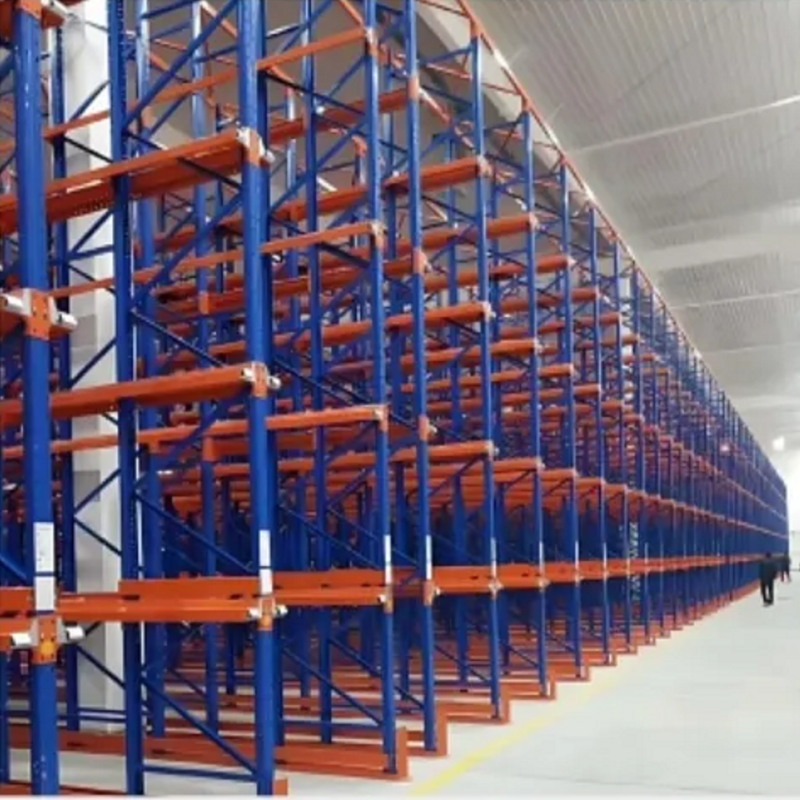
At its core, a drive-in pallet racking system is designed to maximize storage by allowing forklifts to enter the rack's interior lanes. Unlike selective racking, where each pallet is accessible individually, drive-in racks operate on a Last-In-First-Out (LIFO) principle. This makes them ideal for warehouses storing large quantities of similar products.
The structural design includes rails, frames, and guides that support heavy loads while allowing precise forklift alignment. Modern drive-in racks can be customized in height, depth, and load capacity, enabling warehouses to optimize space according to inventory type and forklift dimensions.
Key Advantages:
● High-density storage reduces aisle requirements.
● Lower total cost per pallet stored compared to selective racking.
● Scalable for multi-level warehouses with heavy-duty forklifts.
2. Breaking the Mold: Innovative Applications
While drive-in racks are traditionally used in cold storage and bulk storage, innovative applications are emerging:
● E-commerce Fulfillment Centers: Using drive-in racks for high-demand SKUs allows for dense storage of fast-moving goods.
● Pharmaceutical Storage: Controlled access lanes combined with LIFO ensures inventory rotation and compliance.
● Seasonal or Promotional Inventory: Temporarily expand storage without major renovations.
● Automotive Parts Warehouses: Store similar parts efficiently with minimal floor space.
These cases illustrate that with smart drive in racking system design, warehouses can flexibly adapt to industry-specific challenges while maximizing throughput.
3. Design Secrets of a High-Performance Drive-In Racking System
Designing an effective drive-in system requires more than stacking pallets. Critical considerations include:
● Aisle Width & Depth Optimization: Narrow aisles save space but require precise forklift operation.
● Load Weight & Height Calculation: Each lane must support maximum pallet load while maintaining safety.
● Integration with Automation: Sensors and RFID systems can track pallets and guide forklifts.
● Safety & Maintenance: Reinforced frames, guide rails, and impact protection reduce accidents and downtime.
Proper design ensures maximum density without compromising operational efficiency, while innovative layouts allow warehouses to expand vertically, increasing storage per square meter.
4. Drive-In Racks in Action: Forklift Dynamics
Forklift interaction with drive-in racks is a critical factor. Operators must navigate tight lanes with precision:
● Guided Entry: Rails and lane markers help maintain alignment.
● Load Placement & Removal: Consistent LIFO operations prevent bottlenecks.
● Damage Prevention: Impact sensors and reinforced rails reduce collisions.
Warehouse case studies show that well-trained forklift operators in a smart drive-in warehouse can increase throughput by 30–50% compared to traditional racking layouts.
5. Cost Perspective: Drive-In Pallet Racking Prices
Cost is influenced by multiple factors:
● Material: Steel gauge, coatings, and reinforcement.
● Height & Depth: Taller or deeper racks require more support structures.
● Load Capacity: Heavier pallets demand stronger frames and rails.
● Installation & Maintenance: Professional installation ensures longevity and reduces risk.
Although drive in pallet racking prices may initially seem higher than selective racking, the cost per stored pallet often proves lower due to higher density and space efficiency.
6. Buying Guide: Drive-In Pallet Racking for Sale
When looking for drive in pallet racking for sale, consider:
● Supplier Reputation: Quality certifications, customer reviews, and references.
● Customization Options: Height, depth, load capacity, and lane width.
● After-Sales Support: Installation, maintenance, and warranty services.
Choosing the right supplier ensures a balance between drive-in efficiency, cost, and long-term reliability.
7. The Future: Smart Warehouses with Drive-In Systems
Drive-in systems are evolving with technology:
● IoT Integration: Sensors track pallets and forklift movements in real-time.
● AI & Data Analytics: Predictive algorithms optimize lane usage and inventory rotation.
● Sustainability & Space Efficiency: Maximizing storage density reduces warehouse footprint.
The future warehouse is not just a storage facility—it's a fully connected, intelligent ecosystem where drive in racks play a pivotal role in efficiency, cost reduction, and operational safety.
Contact Us
FAQ
① What is the difference between drive-in and drive-through racking?
Drive-in racks use LIFO; drive-through allows FIFO and typically has aisles on both sides.
② How deep can drive-in racks go safely?
Depth depends on forklift reach, rail strength, and load weight; 5–10 pallets deep is typical.
③ Can drive-in racks integrate with automated forklifts?
Yes, guided systems with sensors and RFID enable semi or fully automated operations.
④ What industries benefit most from drive-in racking?
Cold storage, beverage, automotive parts, e-commerce, and seasonal goods storage.
⑤ How to calculate the cost of a drive-in pallet racking system?
Consider material, height, depth, load capacity, installation, and maintenance.