

1. Introduction to Toyota Very Narrow Aisle Forklifts
In today's logistics and warehousing industry, space efficiency has become one of the most critical competitive advantages. Rising land costs, increasing inventory volumes, and faster order fulfillment requirements are forcing warehouses to store more goods within the same footprint. This is where the Toyota Forklift product range stands out—especially the Toyota very narrow aisle forklift.
Designed for high-density storage environments, Toyota VNA forklifts allow warehouses to dramatically increase pallet positions by reducing aisle width and utilizing vertical space more effectively. Compared to conventional forklifts, VNA forklifts redefine how modern warehouses operate, combining precision, safety, and productivity.
2. What Is a Very Narrow Aisle Forklift (VNA Forklift)?
A VNA forklift, short for very narrow aisle forklift, is a specialized type of warehouse forklift designed to operate in aisles significantly narrower than those required by standard counterbalance or reach trucks. Typical VNA aisle widths range from 1.6 to 2.0 meters, depending on pallet size and configuration.
What truly differentiates a VNA forklift is its ability to lift loads to extreme heights—often exceeding 12 meters—while maintaining precise control. Most VNA forklifts use turret heads or articulated forks that rotate to pick and place pallets without turning the truck body, making them ideal for ultra-narrow aisles.
3. Why Choose a Toyota Forklift for Very Narrow Aisle Operations
Toyota Forklift is a global leader in material handling equipment, known for its manufacturing quality, engineering precision, and long-term reliability. When it comes to very narrow aisle operations, these strengths become even more critical, as VNA forklifts operate under demanding conditions where accuracy and safety are essential.
Toyota's VNA forklifts are designed with robust mast structures, advanced electronic control systems, and strict quality standards. This results in lower maintenance costs, longer service life, and consistent performance even in intensive, multi-shift warehouse operations.
4. Key Features of Toyota Very Narrow Aisle Forklifts
Toyota very narrow aisle forklifts are equipped with a wide range of advanced features designed to optimize performance in confined spaces. These include rail guidance or wire guidance systems that ensure straight-line travel, reducing the risk of collision with racking systems.
Additionally, Toyota integrates ergonomic operator cabins, intuitive control interfaces, and high-visibility designs. These features allow operators to work more comfortably and accurately, even during long shifts and at extreme lifting heights.
5. Applications of Toyota VNA Forklifts in Modern Warehouses
Toyota VNA forklifts are widely used in warehouses where maximizing vertical space is a top priority. Common applications include e-commerce fulfillment centers, third-party logistics (3PL) warehouses, pharmaceutical distribution centers, and cold storage facilities.
In these environments, the ability to store more pallets per square meter directly translates into lower operating costs and faster order processing. Toyota VNA forklifts support these goals by delivering consistent and reliable performance.
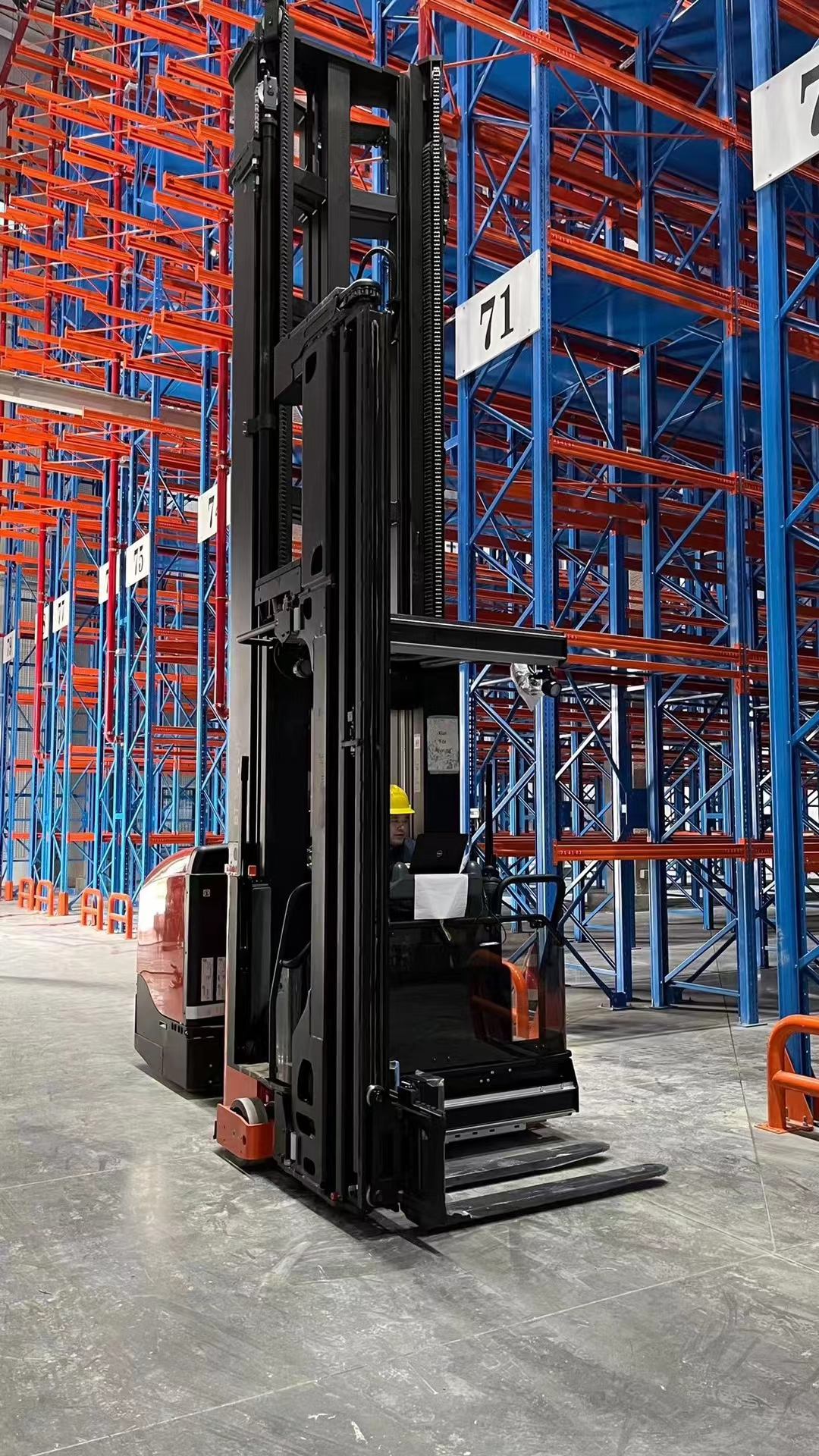
6. Space Optimization: How VNA Forklifts Increase Storage Capacity
One of the biggest advantages of using a very narrow aisle forklift is its impact on warehouse layout optimization. By reducing aisle width and increasing lift height, warehouses can significantly increase the number of pallet locations without expanding the building.
In many cases, switching to Toyota VNA forklifts can improve storage capacity by 30–40%, making them a strategic investment for businesses facing space constraints or rapid inventory growth.
7. Safety and Operator Efficiency with Toyota Very Narrow Aisle Forklifts
Operating in very narrow aisles requires advanced safety systems. Toyota VNA forklifts incorporate speed management, load monitoring, and operator assistance technologies to minimize risk and improve handling accuracy.
These safety features not only protect operators and goods but also reduce downtime caused by accidents or product damage, contributing to overall warehouse efficiency.
8. Very Narrow Aisle Forklift Price: What Influences the Cost?
The very narrow aisle forklift price varies depending on several factors, including lift height, guidance system type, load capacity, and automation level. Customized configurations and warehouse-specific requirements can also influence the final cost.
Although the initial investment is higher than standard forklifts, Toyota VNA forklifts deliver long-term savings through reduced space costs, higher productivity, and lower maintenance requirements.
9. Toyota VNA Forklift vs Other Warehouse Forklifts
Compared to reach trucks and conventional electric forklifts, Toyota VNA forklifts are specifically optimized for ultra-narrow aisles and high-bay storage systems. While reach trucks offer flexibility, they cannot match the space efficiency of VNA forklifts.
For warehouses aiming to maximize storage density, Toyota VNA forklifts provide a clear advantage.
10. How to Choose the Right Toyota Very Narrow Aisle Forklift
Selecting the right Toyota very narrow aisle forklift requires a detailed evaluation of warehouse layout, aisle width, pallet dimensions, and operational requirements. Automation readiness and future expansion plans should also be considered.
Working with an experienced Toyota forklift supplier ensures the selected model aligns perfectly with long-term warehouse strategy.
11. Future Trends in Very Narrow Aisle Forklift Technology
The future of VNA forklifts lies in automation and digital integration. Toyota is actively developing solutions that combine AI navigation, real-time data analytics, and seamless WMS integration.
These innovations will further enhance efficiency, accuracy, and scalability in next-generation smart warehouses.