

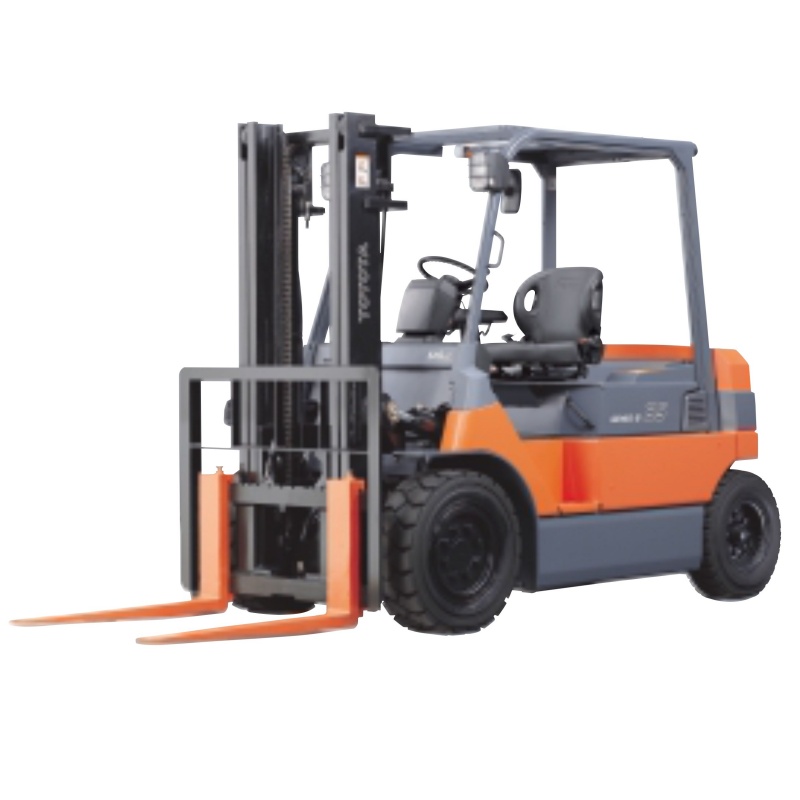
Toyota forklifts, as indispensable handling equipment in modern logistics and warehousing, are widely favored for their efficiency and reliability. However, forklift operation is not without risks. Improper operation or poor maintenance can easily lead to serious safety accidents, resulting in casualties and property losses. To enhance the safety of forklift operations, this article will explain eight common safety hazards in Toyota forklift operations.
1. Operation by Unlicensed Personnel
Forklifts, as special equipment, require a certain level of professionalism and carry inherent dangers in their operation. According to relevant national regulations, forklift drivers must undergo professional training and obtain the corresponding operation qualification certificate before they can operate the equipment. Unlicensed operation not only violates laws and regulations, but more seriously, unlicensed personnel often lack the necessary safety knowledge, operational skills, and emergency handling capabilities. They may not be familiar with the performance characteristics of forklifts, safe operating procedures, and the use of various safety devices. In the event of an emergency, it is difficult for them to make correct judgments and effective responses, thereby greatly increasing the probability of accidents. For example, in complex working conditions such as turning in narrow passages, driving on slopes, or stacking at high altitudes, unlicensed operators are more likely to cause vehicle overturning, cargo falling, or collision accidents due to misoperation.
2. Overloading
Overloading is a common violation in forklift operations and one of the important causes of accidents. Each Toyota forklift has its rated load capacity, which is the safety limit calculated based on the forklift's structure, center of gravity, stability, and other factors. Once the rated load is exceeded, the forklift's center of gravity will shift, and its stability will sharply decrease, especially during lifting, lowering, turning, or braking, making it extremely prone to tipping or overturning accidents. Overloading also leads to excessive wear of forklift components, such as tires, braking systems, and hydraulic systems, shortening the forklift's service life, increasing maintenance costs, and even causing sudden failures during operation, leading to unpredictable dangers. In addition, overloading can affect the driver's vision and increase the difficulty of operation, further posing safety hazards.

3. Speeding
Speeding with a forklift in a warehouse or work area is extremely dangerous. Forklifts usually operate in confined spaces, and there may be pedestrians, other equipment, or obstacles around. Speeding significantly shortens the driver's reaction time and increases braking distance, making it difficult for the driver to stop or avoid in an emergency. Especially on slippery roads, when turning, or when driving with a load, speeding is more likely to lead to loss of control, skidding, or even overturning. High-speed driving also exacerbates vehicle vibration, which may cause cargo on the forks to shift or scatter due to inertia, posing a threat to surrounding personnel and equipment. In addition, frequent rapid acceleration and braking also accelerate the wear of forklift components, affecting their performance and safety.
4. Riding on the Toyota Forklift
Toyota forklifts are specialized equipment for handling goods, and their design does not consider passenger carrying capabilities. Carrying people on a forklift, whether sitting on the forks, on the body, or standing outside the cab, poses extremely high safety risks. First, during forklift travel, lifting, or lowering, passengers may lose balance due to vehicle bumps, sudden braking, or sharp turns, falling from the forklift and causing serious personal injury. Second, carrying people can obstruct the driver's vision and interfere with normal operation, increasing the risk of collision accidents. In addition, the design structure and safety protection measures of forklifts are for cargo handling, not for carrying people. Once an accident occurs, passengers will face a higher risk of injury, and even life-threatening situations. Therefore, it is strictly forbidden to carry people on a forklift under any circumstances.
5. Sharp Turns
Making sharp turns with a forklift at high speed or with a load can easily lead to vehicle instability and overturning accidents. Forklifts have a high center of gravity, which further increases after lifting cargo. The centrifugal force generated during sharp turns will cause the forklift to tilt outwards. If the speed is too fast or the load is too heavy, the forklift may lose balance and overturn. In addition, sharp turns can also cause cargo on the forks to shift or even fall due to inertia, posing a threat to surrounding personnel and equipment. In narrow passages or areas with obstructed vision, the risk of sharp turns is even higher, as the driver may not be able to detect obstacles or pedestrians in time, leading to collision accidents. Therefore, forklift drivers should slow down in advance when turning and operate smoothly to ensure the stability of the vehicle and cargo.
6. Working While Standing on the Forks
Using the forks as a platform for high-altitude work is an extremely dangerous act and a common violation in forklift accidents. The forks are designed to carry goods, and their smooth surface lacks anti-slip measures, making it easy for personnel to slip. In addition, during the lifting and lowering of the forks, there are no safety protection devices to ensure the stability and safety of the working personnel. If the forklift operator makes a mistake, the forks malfunction, or the working personnel lose their balance, it can lead to personnel falling from a height, causing serious or even fatal injuries. The correct approach is to use professional lifting platforms or personnel carriers that comply with safety regulations for high-altitude work, and ensure that working personnel wear safety belts and other protective equipment.
7. Lack of Regular Forklift Maintenance
As a mechanical equipment, various parts of a forklift will wear, age, or degrade in performance during long-term use. Regular maintenance is key to ensuring the normal operation of Toyota forklifts, extending their service life, and guaranteeing operational safety. Lack of regular maintenance can lead to the deterioration of the performance of various forklift systems (such as braking systems, steering systems, hydraulic systems, electrical systems, etc.), increasing the probability of failures. For example, brake failure, insensitive steering, hydraulic system leaks, and severe tire wear can all occur suddenly during operation, directly leading to accidents. In addition, unmaintained forklifts may have safety hazards, such as loose bolts, aging wiring, and non-functioning lights. Although these problems may seem minor, they can lead to serious consequences at critical moments. Therefore, strictly following the manufacturer's regulations for regular maintenance is a necessary condition to ensure the safe operation of forklifts.
8. Using Inferior Quality Oils
The normal operation of Toyota forklifts relies on various oils for lubrication, cooling, and transmission. These oils include engine oil, hydraulic oil, transmission oil, and brake fluid. Using inferior or non-compliant oils can severely damage the forklift's performance and lifespan, and pose safety hazards. Inferior oils may contain impurities, leading to clogged oil passages and accelerated component wear; their viscosity, oxidation resistance, and wear resistance may not meet standards, affecting the normal operation of various forklift systems, such as insufficient hydraulic system pressure, reduced braking performance, and engine overheating. In the long run, this will not only accelerate the damage to forklift components and increase maintenance costs, but also may cause mechanical failures during operation, leading to accidents. Therefore, it is essential to use high-quality, standard-compliant oils from legitimate channels, as the forklift manufacturer recommends.
The above 8 points are high-frequency violation scenarios for forklift safety accidents! If you want to learn more about Toyota forklift safety technical details, operating procedures, or more professional knowledge, please feel free to contact us. We will provide you with a complete knowledge system covering vehicle characteristics, maintenance, safety regulations, and other dimensions, helping you fully grasp the core points of forklift operation!