

When an electric forklift is in motion, it often needs to change direction to adapt to road variations and operational requirements. Therefore, drivers must understand the technical factors related to steering to correctly analyze and judge when to apply steering appropriately.
Minimum Turning Radius and Inner/Outer Wheel Differences
Electric forklift manufacturers remind us that the steering of an electric forklift is achieved by turning the steering wheel to change the direction of the rear wheels (steering wheels) and by using the differential mechanism in the drive axle to adjust the rotational speeds of the left and right front wheels. For proper steering, drivers must first correctly estimate the road curvature and the forklift's tire tracks. Two factors influence the forklift's turning angle: the minimum turning radius and the inner/outer wheel differences.
1. Minimum Turning Radius of Electric Forklifts
When the steering wheel is turned fully to the right (or left), the forklift will travel in a circular path. Taking an internal combustion forklift as an example, the radius of this circle (calculated from the outermost track of the forklift) when the forklift is moving at idle speed is the minimum turning radius of the vehicle.
The turning radius of an electric forklift is determined by the steering angle of the rear wheels and the forklift's dimensions. A larger steering angle and smaller dimensions result in a smaller minimum turning radius, making turns easier; conversely, turns become more difficult with a smaller steering angle or larger dimensions. Since the steering angle and dimensions of each forklift model are fixed in its design, the minimum turning radius of each forklift remains unchanged.
Therefore, electric forklift manufacturers advise that when driving a forklift with a larger minimum turning radius, drivers must ensure that the front outer wheels (or rear outer wheels when reversing) do not go off the road or collide with obstacles. When driving a forklift with a smaller minimum turning radius, drivers should pay attention to preventing the rear outer wheels (or front inner wheels when reversing) from going off the road or hitting obstacles.
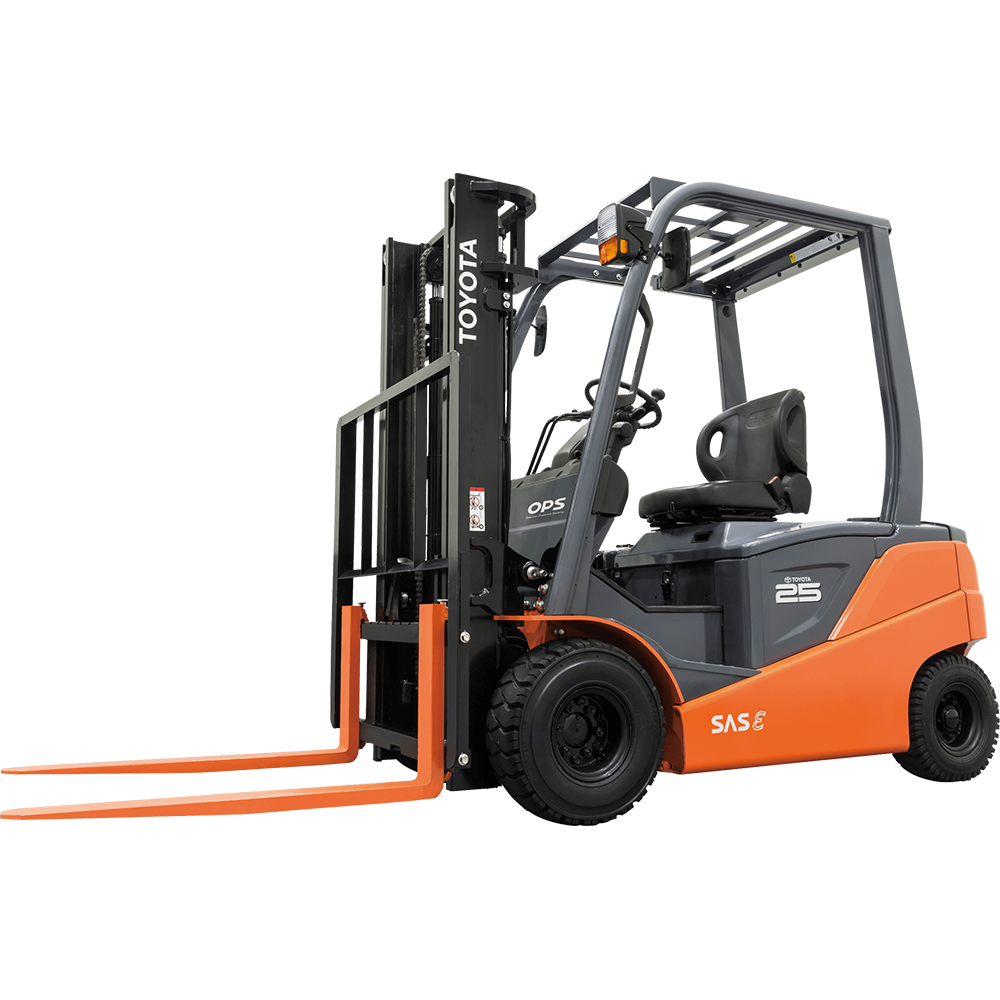
2. Inner Wheel Difference and Outer Wheel Difference of Electric Forklifts
When a forklift turns, the difference between the turning radius of the rear inner wheel and the front inner wheel is called the inner wheel difference. The difference between the turning radius of the rear outer wheel and the front outer wheel is called the outer wheel difference. The sizes of the inner and outer wheel differences are determined by the steering angle and axle dimensions of each vehicle model.
Electric forklift manufacturers remind drivers that when turning, they must not only correctly estimate the minimum turning radius to ensure the front outer wheels and forks do not go off the road or collide with obstacles but also consider the outer wheel difference to avoid the rear outer wheels from going off the road or hitting obstacles. Additionally, when reversing, drivers must account for the inner wheel difference to prevent the front inner wheels from going off the road or crushing obstacles.