
Chapter 1: Introduction – The Challenge of Extreme Material Handling
In modern industrial logistics, standard material handling equipment often falls short when confronted with hazardous chemical warehouses, sub-zero cold chains, or high-density smart factories. Operating conventional machinery in these environments leads to frequent component breakdowns, safety hazards, and costly downtime. To solve these problems, selecting a reliable, highly engineered Toyota Forklift tailored for extreme environments is no longer just an upgrade—it is a compliance and productivity necessity.
Toyota's specialized fleet offers robust custom solutions designed from the ground up rather than relying on aftermarket modifications. By ensuring every component is optimized for safety, thermal management, and autonomous navigation, Toyota sets the benchmark for reliability in the harshest operational conditions.
Chapter 2: Toyota Explosion-Proof Forklifts – Safety Redefined for Hazardous Zones
Industrial facilities handling volatile chemicals, paints, inks, and explosive dust require specialized equipment that guarantees absolute ignition control. The Toyota explosion-proof forklift series provides a comprehensive barrier against workplace accidents. These custom-engineered electric and internal combustion models are certified under strict international explosive atmosphere standards, making them perfect for high-risk zones.
Unlike standard machinery that can emit electric sparks or generate high surface heat, Toyota’s explosion-proof engineering treats the entire vehicle structure. Key upgrades include:
● Intrinsically Safe Electrical Circuits: All electronics are sealed and insulated to prevent any electrical arcing or static discharge.
● Flameproof Enclosures: Motors and switches are housed in robust, heavy-duty enclosures to contain any internal explosion.
● Anti-Static and Spark-Free Materials: Forks are clad in non-sparking alloys (such as brass or stainless steel cladding), and tires are constructed with anti-static materials to discharge built-up energy safely into the ground.
● Thermal Monitoring: Active temperature sensors prevent brakes, engines, or motors from exceeding critical flashpoint temperatures.
Chapter 3: Cold Storage Specialized Forklifts – Defeating Sub-Zero Temperatures
Cold chain logistics, frozen food processing, and pharmaceutical storage involve temperatures as low as minus thirty-five degrees Celsius. Operating in these microclimates exposes machinery to constant freezing-thawing cycles, causing severe condensation, frozen hydraulics, and rapid battery depletion. Toyota's cold storage specialized forklifts are specifically built to thrive in these conditions without stalling.
Key technological advancements engineered into these sub-zero vehicles include:
● Moisture-Resistant Sealings: All microswitches, connectors, and controllers feature high IP ratings to prevent water ingress during transition from freezing storage to ambient dock areas.
● Low-Viscosity Specialized Hydraulics: Custom formulated hydraulic fluid and cold-resistant seals prevent stiffening, maintaining smooth and precise mast movement even at extreme sub-zero temperatures.
● Active Heating Solutions: Built-in heating elements protect batteries, operator displays, and controller modules from freeze-induced failures.
● Anti-Corrosion Chassis Treatment: Advanced multi-layer paint and rust-resistant hardware protect the chassis from the corrosive effects of salt and high moisture levels typical in food logistics.
Chapter 4: Toyota AGV & Automated Guided Vehicle Forklifts – Driving Smart Warehousing
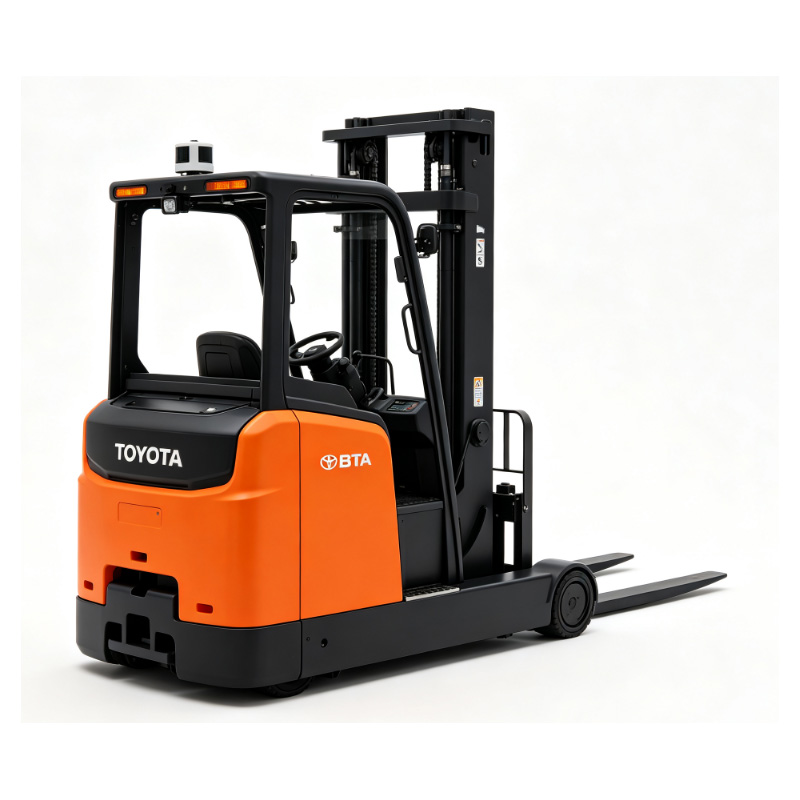
To establish competitive twenty-four hours a day, seven days a week dark factories and intelligent warehouses, companies are rapidly shifting toward high-tech automated material handling. The integration of Toyota’s durable vehicle chassis with advanced robotics has produced the industry-leading Toyota AGV forklift line. Utilizing these automated guided vehicle forklift solutions helps eliminate manual labor bottlenecks and significantly boosts throughput consistency.
The Toyota Automated Guided Vehicle system features high-precision navigation, such as laser guidance and natural feature mapping, which allows seamless integration into existing Warehouse Management Systems (WMS). Key operational advantages include:
● Complete Autonomous Workflow: Supports automated picking, high-level stacking, precision horizontal transport, and automatic charging routines without human intervention.
● Uncompromising Safety Arrays: Equipped with dual-laser safety scanners, obstacle detection sensors, and immediate emergency stops, satisfying stringent international safety standards.
● Versatile Fleet Configuration: Available in reach truck, counterbalance, and pallet stacker profiles to match any warehouse layout or aisle width constraint.
Chapter 5: Technical Comparison Matrix & B2B Decision Guide
Selecting the right custom material handling solution depends heavily on your specific operational constraints. Below is a structured technical comparison matrix to guide your enterprise evaluation process.
| Specialty Forklift Category | Core Target Scenario | Key Technical Feature | Safety / Environment Certification |
|---|---|---|---|
| Toyota Explosion-Proof Forklift | Chemical, dangerous goods, spray paint, and ink warehouses | Intrinsically safe circuits, non-sparking copper-clad forks, thermal monitors | ATEX, IECEx, National Ex Certification |
| Cold Storage Specialized Forklift | Sub-zero cold chains, seafood, and frozen food processing | IP65 water protection, low-viscosity hydraulic oil, active heaters | IP-Rated Water/Dust Resistance, Low-Temp Rating (minus thirty-five degrees Celsius) |
| Toyota AGV / Automated Guided Vehicle | Smart warehouses, dark factories, high-frequency logistics yards | Laser guidance, WMS/ERP system integration, automatic charging | ISO 3691-4 Safety Standards, CE Certification |
FAQ
Q1: Can a standard Toyota Forklift be retrofitted with third-party components to match extreme environment requirements?
A: While aftermarket retrofitting is possible, it often compromises the structural integrity, safety certifications, and warranty of the vehicle. Toyota's specialty forklift line is engineered directly in-house, ensuring robust, certified performance that meets stringent international safety and environmental regulations natively.
Q2: How does the Toyota Automated Guided Vehicle handle transitions between cold storage and ambient temperatures?
A: When using an automated guided vehicle forklift in mixed temperature operations, temperature transition zones are carefully calibrated. Condensation-resistant sensors and heating elements on the Toyota AGV forklift prevent lens fogging and electronic failures, allowing safe navigation between different climatic zones.
Q3: What are the main certification standards for the Toyota explosion-proof forklift?
A: These forklifts are built and tested to meet major global explosion-proof guidelines, including ATEX directives in Europe, IECEx international standards, and local national explosion safety regulations, guaranteeing safe deployment in explosive gas and dust environments.
Contact Us