

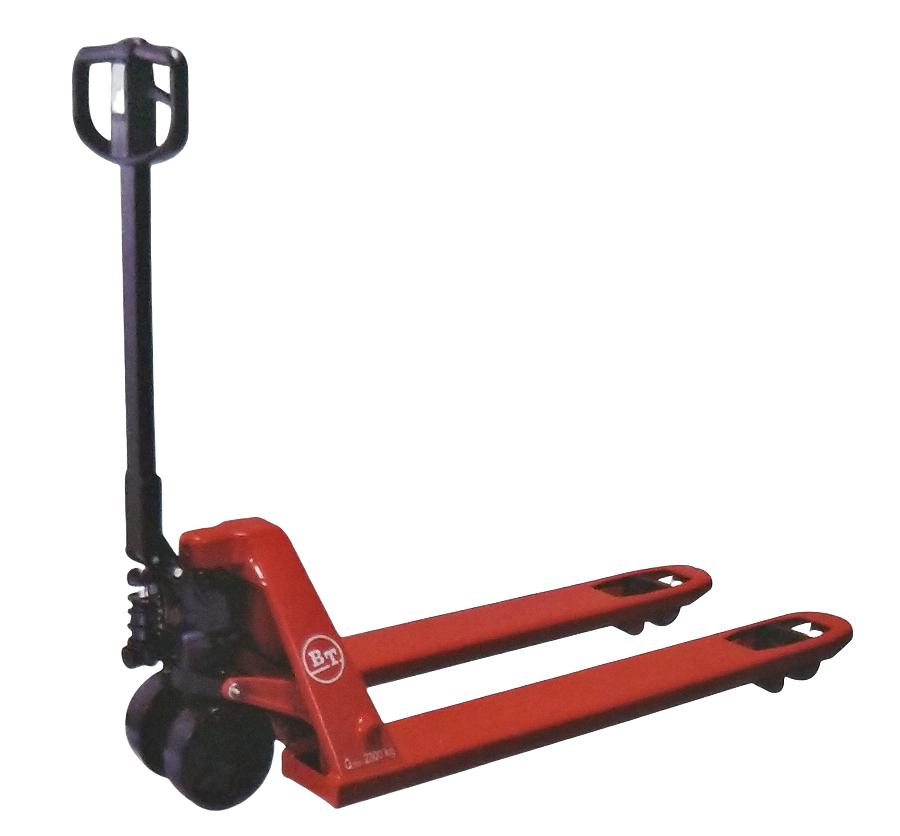
Choosing the right Hydraulic Hand Pallet Truck is one of the highest-ROI decisions a warehouse or workshop buyer can make. The right manual pallet truck improves safety, reduces damage to product, and lowers operating cost — while the wrong one creates downtime, repair bills, and risk. In this guide (written from the perspective of an export manager at a China-based Toyota forklift dealer), we'll walk through the practical selection criteria, capacity comparisons (including hydraulic hand pallet truck 1 ton, truck hand pallet hydraulic 1.5 ton, 2.5 ton hydraulic hand pallet truck, and hydraulic hand pallet truck 3 ton), and the real drivers of hydraulic hand pallet truck price.
1. Start with the load — pick capacity correctly
The single most important decision is capacity. Always size to the maximum load you will ever move, then add a safety margin (10–25%).
hydraulic hand pallet truck 1 ton — Best for retail, light-duty shops, and single layer shelving. Very maneuverable in tight spaces.
truck hand pallet hydraulic 1.5 ton — The most common, fits standard Euro/US pallets and routine pallet handling. Good cost / capability balance.
2.5 ton hydraulic hand pallet truck — For denser loads or occasional heavy items and stacked pallets.
hydraulic hand pallet truck 3 ton — Industrial heavy-duty applications (machine shops, metalworking, oversized pallets).
Tip: if your heaviest pallet is 1,300 kg, choose at least a 1.5-ton model (and consider 1.8–2.0 ton if you expect dynamic shock loads).
2. Match fork length & width to pallets and racks
Fork dimensions determine whether the truck will actually enter racking and support the load.
Short forks (800–900 mm): small pallets, narrow aisles.
Standard forks (1150–1220 mm): most pallets (Euro, UK, US).
Long forks (1500–2000+ mm): long loads, twin-pallet handling.
Also check fork width (single vs double entry) and clearance needed for racking. If you use racked pallets, measure entry depth and choose fork length accordingly.
3. Wheels & floor conditions — don't skimp on wheel choice
Wheels affect ride, noise, and life.
Nylon/steel: hard, wear-resistant; good for rough yard surfaces and heavy loads.
Polyurethane (PU): quieter, better for smooth floors and sensitive floors (less marking).
Rubber: better traction on uneven or inclined surfaces.
Sealed bearings and replaceable rollers are essential when dust or moisture is present.
4. Pump, valve and chassis — what affects longevity
Not all pumps and chassis are equal. These features are indicators of real world durability:
Pump & lowering valve quality: look for smooth, consistent lift and a controlled lowering action. A rough pump or spongy lowering valve is a safety hazard and will shorten pump life.
Chassis & fork thickness: thicker steel, reinforced weld seams and gussets resist bending under repeated stress.
Bearings & rollers: sealed bearings last longer in dusty environments; modular rollers are cheaper and faster to replace.
Handle ergonomics & release lever: a well-designed handle reduces operator fatigue and the risk of repetitive strain.
Finish (galvanized / powder coat): critical if you operate in humid or coastal locations.
If possible, inspect or test a sample to feel the pump action and steering.
5. Safety, certification & warranties
Ask for load test certificates and CE/ISO documentation. For export customers a clear warranty and spare-parts program is vital — a 2-year parts warranty or a structured spare-parts agreement is a strong advantage.
6. How to interpret hydraulic hand pallet truck price
hydraulic hand pallet truck price ranges widely. Price differences reflect:
Rated capacity and materials (thicker forks, heavier frames).
Hydraulic component quality (pump, valve, seals).
Wheel material and bearings.
Corrosion protection and finish.
Testing, certifications, and warranty/support.
Don't buy on upfront price alone — consider total cost of ownership: expected life, spare parts cost, downtime risk, and operator productivity. A slightly pricier model with better hydraulics and replaceable rollers will often be cheaper over 3–5 years.
7. Practical evaluation checklist (use before you buy)
Confirm maximum load + 10–25% safety margin.
Match fork length & width to pallet and rack depth.
Check floor type and select wheel material accordingly.
Test the pump & lowering valve: smooth lift, predictable descent.
Verify spare parts availability (rollers, bearings, seals, pumps).
Request load test certificate and warranty terms.
Get realistic quotes including freight and spare parts (compare FOB vs CIF).
For export: confirm packaging, MOQ, and OEM/label options.
8. Use cases & quick recommendations
Small retail or shop floor: choose a hydraulic hand pallet truck 1 ton with short forks and PU wheels.
General warehouse / standard pallets: truck hand pallet hydraulic 1.5 ton with standard forks and replaceable rollers.
Mixed loads with occasional heavy items: consider a 2.5 ton hydraulic hand pallet truck.
Industrial heavy work: hydraulic hand pallet truck 3 ton with reinforced forks and heavy-duty wheels.
9. Final thoughts — buy for the operation, not the spec sheet
The best purchase decision balances capacity, environment, ergonomics, and total cost of ownership. Investing a bit more in pump quality, replaceable rollers, and corrosion protection usually pays back quickly through lower maintenance and fewer stoppages.
If you'd like, our export team at Toyota Forklift can prepare a tailored model comparison and FOB/CIF quotation that recommends specific wheel sets and fork lengths for your pallets. Tell us your maximum pallet weight, pallet dimensions, and floor type — we'll map the best Hydraulic Hand Pallet Truck (from hydraulic hand pallet truck 1 ton up to hydraulic hand pallet truck 3 ton) and provide competitive hydraulic hand pallet truck price options.
Ready to compare models and get a quote? Contact Toyota Forklift for sample specs, spare-parts plans, and export packaging options.