

When choosing a forklift—especially a used one—brand reputation and longevity matter. Toyota forklifts are widely recognized for their exceptional reliability, long-term performance, and cutting-edge technology, making them a trusted choice across industries for more than six decades.
Here's why Toyota forklifts continue to dominate both the new and used equipment markets:
1.1 Engineered for Reliability
From the very first 1960 Toyota forklift to the ultra-modern 2023 model, Toyota has maintained a relentless focus on building machines that last. Their engines are designed for heavy-duty performance, whether gas, diesel, LPG, or electric. Even forklifts from the 1990s—like the 1994, 1996, and 1999 Toyota forklifts—are still running reliably in small warehouses and repair shops today.
1.2 Consistent Innovation
Toyota never rests on its past success. Over the years, they've introduced major innovations that became industry standards. For instance:
1999: Improved counterbalance designs.
2005: Debut of the System of Active Stability (SAS), enhancing safety and reducing tip-over risks.
2017–2023: Advanced telematics, automation, and eco-friendly hybrid models.
Each model year brings small but important improvements, making even older forklifts like a 2010 Toyota forklift still competitive by today’s standards.
1.3 Wide Compatibility and Global Support
With a global parts supply chain and consistent design philosophy, it's easier to repair or maintain Toyota forklifts—regardless of the year. Whether you own a 1984 Toyota forklift or a 2015 model, replacement parts and service manuals are widely available, giving Toyota forklifts a much longer service life than most competitors.
1.4 Built for All Industries
From light warehouse use to heavy industrial applications, Toyota offers a model for every job:
Compact electric models for indoor use (e.g., 2012–2016 models)
Rugged diesel forklifts for outdoor or rough terrain use (popular in 1980s–1990s models)
Hybrid smart forklifts for high-efficiency logistics (found in 2020–2023 lines)

Key Innovations Over the Decades
Toyota’s forklift evolution is a story of continuous innovation, where each decade built on the last to improve safety, performance, energy efficiency, and operator experience. Let’s break down the major technological and functional milestones by decade and model year.
2.1 The 1960s–1970s: Foundational Years
?️ 1960 Toyota Forklift
Toyota entered the forklift market with reliable, no-frills internal combustion models.
Built for durability and basic material handling tasks.
Introduced in Japan, soon expanded internationally due to rising industrial demand.
?️ 1970 Toyota Forklift
Featured improvements in hydraulic systems and lifting control.
Better load stability and more rugged steel chassis.
Introduced more ergonomic steering designs.
?️ 1974–1976 Toyota Forklifts
Introduced counterbalance innovations and more powerful engines.
Models like the 1975 Toyota forklift gained traction in export markets for their balance of cost and performance.
2.2 The 1980s: Expanding Global Reach
⚙️ 1980–1986 Toyota Forklifts
Enhanced operator safety with improved overhead guards.
Models like the 1983 and 1984 forklifts introduced pneumatic tires and better mast visibility.
1985–1986 models saw stronger transmissions and longer maintenance intervals.
⚙️ 1989 Toyota Forklift
Early electronic ignition systems introduced.
More stable lift mechanisms and chassis updates for rougher terrain applications.
2.3 The 1990s: The Efficiency Era
? 1990–1993 Toyota Forklifts
Increased focus on fuel efficiency and emissions control.
Enhanced hydraulic precision and better torque output for load handling.
? 1994–1999 Toyota Forklifts
Began integrating more electronic systems for diagnostics.
Standout models:
1995 Toyota Forklift: One of the best-selling models due to its balance of power and affordability.
1997 Toyota Forklift: Improved braking systems and operator comfort.
1999 Toyota Forklift: Introduced new dashboard controls and modular engine designs.
2.4 The 2000s: Safety and Technology First
? 2000–2005 Toyota Forklifts
2000 Toyota Forklift: Enhanced lifting capacity with reinforced mast structures.
2005 Toyota Forklift: First appearance of Toyota’s System of Active Stability (SAS) — a major safety breakthrough.
? 2007–2008 Toyota Forklifts
Integrated fuel-efficient engines and refined ergonomic controls.
Became industry leaders in eco-friendly LPG models.
2.5 The 2010s: The Rise of Electric and Smart Forklifts
? 2010–2016 Toyota Forklifts
Shift toward electric models with longer battery life and fast charging.
2013 and 2015 Toyota forklifts added enhanced LED lighting, digital display systems, and tighter turning radii.
? 2017–2019 Toyota Forklifts
Introduction of cloud-connected systems for fleet tracking and predictive maintenance.
Advanced seat suspension and noise-reduction cabins for operator comfort.
2.6 The 2020s: AI and Autonomous Innovation
? 2020 Toyota Forklift
Debut of AI-based diagnostics and semi-autonomous navigation features.
Greater integration with smart warehouse platforms.
? 2022 Toyota Forklift
Energy-efficient electric motors with near-silent operation.
Real-time telemetry for productivity and maintenance insights.
? 2023 Toyota Forklift
Advanced vision sensors for obstacle avoidance.
Fully connected systems for real-time operator feedback and load monitoring.
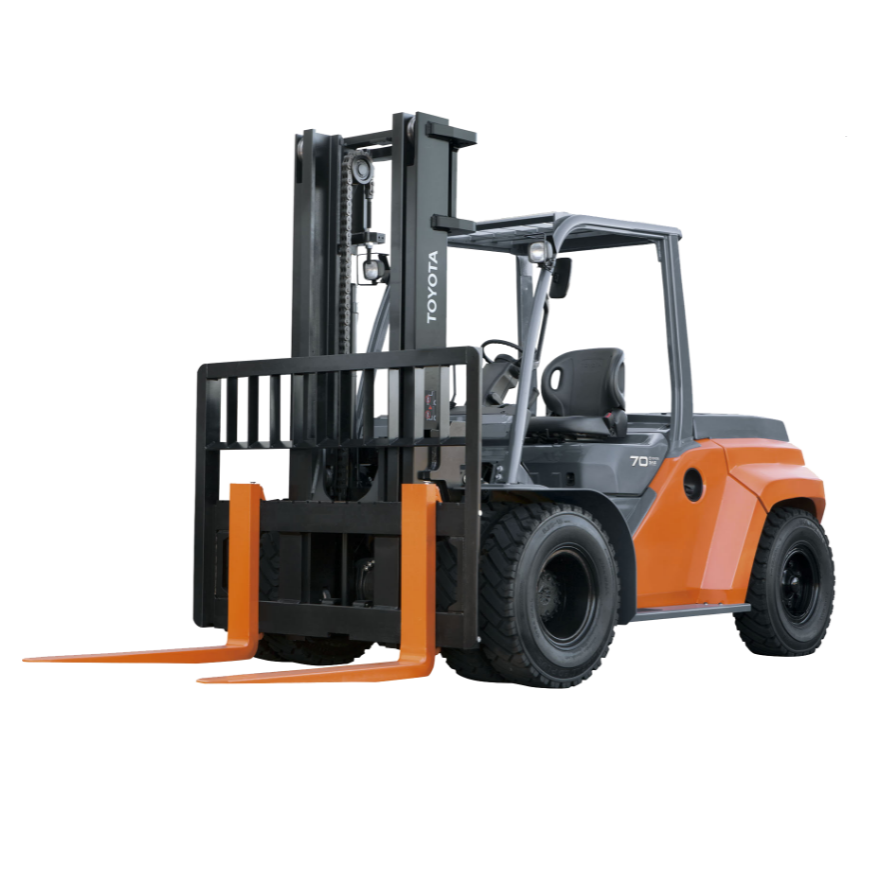
Each generation of Toyota forklift has not only improved in mechanical performance but also brought value in terms of worker safety, automation readiness, and sustainability. That’s why you’ll still find a 1996 Toyota forklift and a 2023 model co-existing on many job sites — each serving its purpose reliably.